


.jpg)
“As soon as anyone works with a horse, they realize [their hair] might be useful,” says Dr. Alexandra Palmer, a fashion historian, curator and lecturer at the University of Toronto. Horsehair is naturally thick and sturdy, yet lightweight, and each strand functions as a piece of extremely durable thread, making it ideal for needlework. And because horsehair is either naturally shed or ethically trimmed from the animal’s mane or tail, it is also a replenishable material.
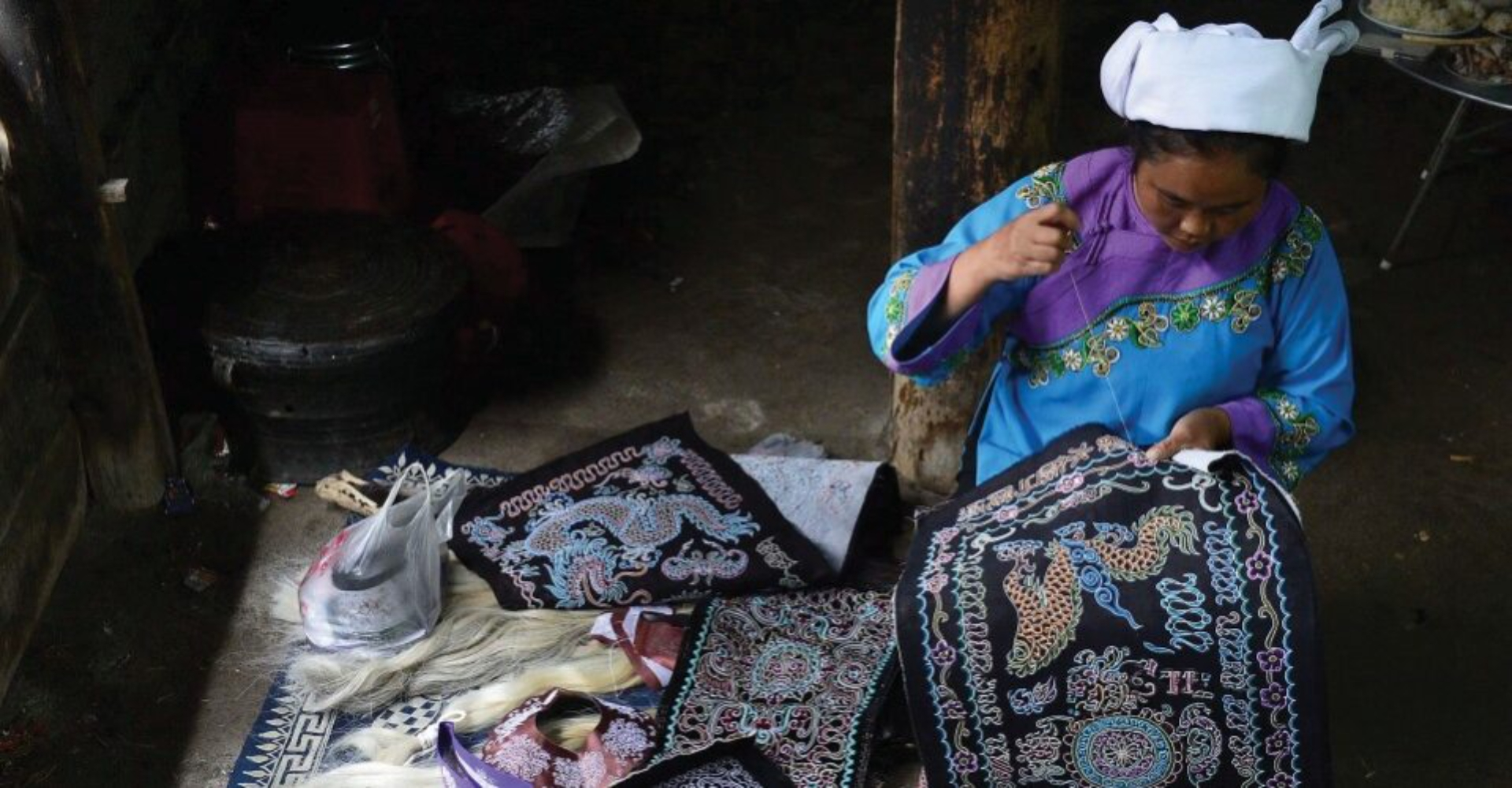
The use of horsehair in fashion dates back centuries. Many civilizations and communities have incorporated this versatile material into their style of dress: some ancient Roman helmets feature a decorative plume of horsehair; and for thousands of years, the Shui people of China have used it to embroider intricate designs onto clothing and accessories. It came into high demand during the 19th century, when European women would wear crinolines made of woven horsehair and linen to achieve the trending full-skirted silhouette of the times.
Initially, the process of using horsehair in textiles often involved the cooperation of children feeding horsehair into the loom. After the 1870 Elementary Education Act was passed in England and Wales, expanding access to schooling, fabrics pioneer John Boyd developed and patented a mechanical loom. Despite the technological advance, weaving horsehair is still a lengthy and complex process. His company is one of the few remaining producers of horsehair fabrics in the world.
Horsehair is also used to create a traditional Korean gat, a wide bamboo-brimmed hat. In fact, the craft of making these hats has been designated as a National Intangible Cultural Heritage by the South Korean government since the 1960s. The hats notably made an appearance as part of the all-black ensemble the Saja Boys wear in the Oscar-winning film K-Pop Demon Hunters.
But despite all its past popularity and versatility, horsehair is not commonly used or worn nowadays. Why? The reason is simple: horses aren’t part of our daily life much anymore. At the peak of horsehair’s sartorial popularity, steeds were the primary mode of transportation. “We don’t have as many horses [anymore]… So, it’s sort of a scarcer fabric or fibre now,” says Dr. Palmer. “It’s a luxury fabric,” she adds. “Whereas it wasn’t necessarily so in the 19th century.”
And because horsehair is just not used as much in the 21st century, its rarity makes it more expensive and more special. So, it may come as no surprise that bespoke men’s suits and high-fashion runways are the two areas where it shows up in the modern-day fashion world. That is largely thanks to the specialized skill required to handle horsehair. “It’s not produced in the volume of other materials,” Dr. Palmer says. “So, you have to be kind of precious about how you use it. It has to be very deliberate as opposed to how people might use a bolt of cotton or silk.” Furthermore, high-fashion runway designers are always trying to push boundaries. “Designers are always looking for new materials or new ways of doing things,” says Dr. Palmer.
Here are five successful examples of horsehair on the runway from all around the world—including Canada—spanning avant-garde garments to one-of-a-kind shoes and bold accessories.
Alexander McQueen
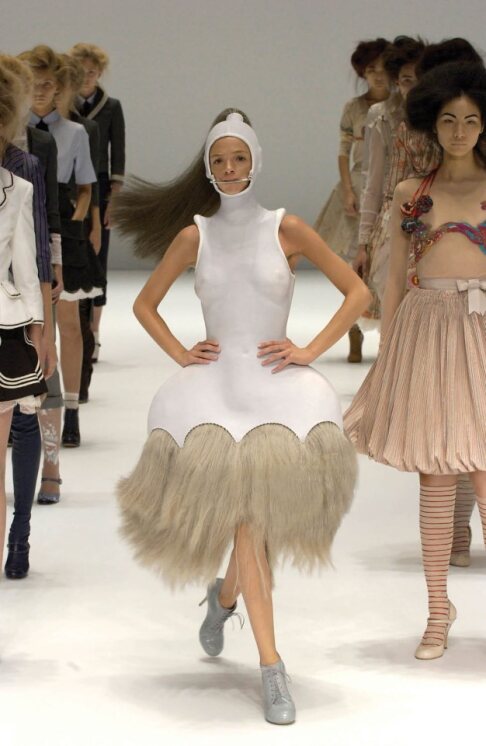
Famed British designer Alexander McQueen never shied away from using unconventional materials in his boundary-pushing collections. In his spring/summer 2005 collection, entitled “It’s Only a Game,” models represented chess pieces. Acting as a pair of knights, two models were clad in matching pastel-colour moulded leather bodices with dramatic horsehair ponytails and skirts that swished as they trotted down the runway.
The horsehair was sourced from the same company that supplies the Royal Horse Guards Albert helmet—known for its 20-inch horsehair plume and worn as part of the full-dress uniform for select British and Canadian cavalry regiments.
Akris
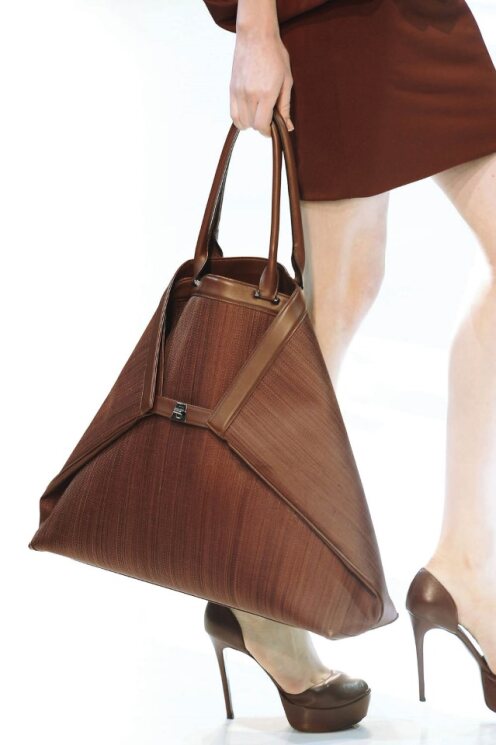
Akris is a luxury Swiss fashion house now helmed by the third generation of the Kriemler family. In 2009, the label launched its first handbag, the Ai Tote Bag, which was made from horsehair. It was sleek, architectural and an instant hit, quickly appearing on the arms of celebrities like Angelina Jolie and Katie Holmes.
The material is sourced from semi-wild and free-run horses in Mongolia, who only get their tails trimmed thrice in a lifetime. The horsehair is brought to a mill in southern England to be woven into a fabric on historic Victorian looms. Horsehair is now a core part of Akris’ house codes, and it is also used to craft wallets, cardholders and other purses.

Ayimach Horizons
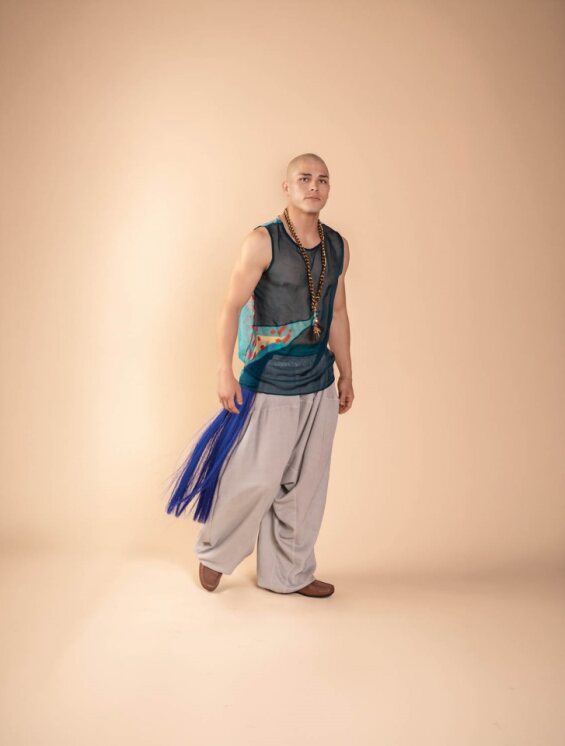
Jason Baerg, founder of the Toronto-based fashion label Ayimach Horizons, has showcased his work at Fashion Art Toronto, Vancouver Indigenous Fashion Week and more. Baerg, who is of Cree-Métisand German descent, often transforms horsehair into colourful earrings and decorative panels on leather handbags. “Horsehair has been a material I love to return to, as it tells a story in movement,” he told the Kit. “I also love what horses represent to me culturally.”
Helmut Lang
Based in New York, Helmut Lang is a luxury fashion label known for its minimalist style and contemporary garments. Its fall 2004 ready-to-wear collection was accented by “small details of delightfully irrational crazy-chic,” according to Vogue’s chief critic Sarah Mower.
The collection included white leather heels with a matching horsehair fringe that swept across the front of models’ feet and attached via an ankle strap. There were also pumps that featured a stiff horsehair ponytail from the back of the ankle. And there were mid-calf leather boots with three tiers of horsehair. The boots were later included in a Metropolitan Museum of Art exhibition.
Hodakova
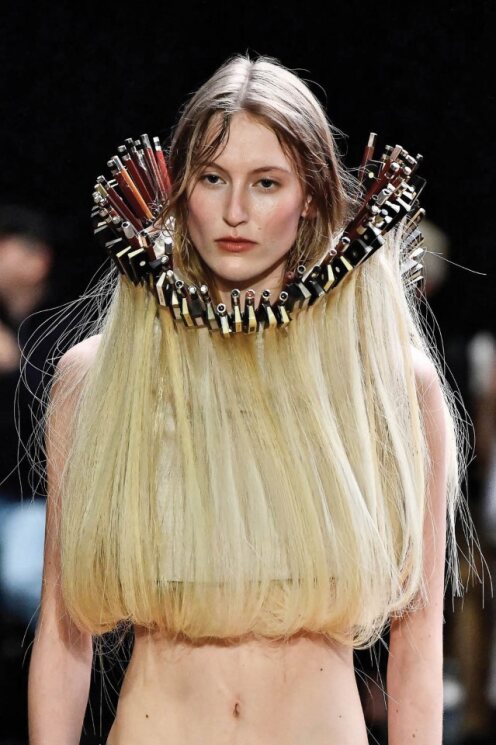
This award-winning Swedish design house aims to create luxury garments with discarded and regenerative materials. In her autumn/winter 2026 collection, founder and designer Ellen Hodakova Larsson did just that—with horsehair. The animals are often associated with a sense of freedom and lack of restraint, which showed in Larsson’s deliberate use of upcycled horsehair violin bows. The standout pieces featured pale yellow horsehair strands hung in a relaxed bubble-shape across one model’s torso, while loosely snaking up and flaring out at the neck on another.