


2026 Toyota bZ & 2026 Toyota bZ Woodland
The sensible Toyota bZ gets a slew of updates, most of which you can’t see but can definitely feel. Firstly, let’s address the elephant in the room— the “4X” part of the name has been dropped. Secondly, it gets an updated front fascia that is slightly reminiscent of the Toyota Prius. And finally, the 2026 Toyota bZ gets a big bump in power and driving range.
While the front-wheel-drive model has seen a drop in power to 168 horsepower, the all-wheel-drive version receives 338 horsepower. That’s a significant bump from the 214-horsepower version of the previous model year. The driving range has also seen significant increases with up to 468 kilometres for the XLE all-wheel-drive trim. That should make the weekend camping trips much less anxiety inducing. The front-wheel-drive version of the bZ can drive for up to 380 kilometres.
Charging is no longer the weak link either. With DC fast charging, Toyota quotes roughly 20 minutes to get from 10 to 80 per cent, putting the bZ firmly into “coffee stop” and not “lunch break” territory. Manufacturer-suggested pricing for the 2026 Toyota bZ starts at $45,990, while a top spec trim is just under $62,000. All versions bring Toyota Safety Sense 3.0, a modern infotainment setup, and the usual “this will probably outlive you” build quality.
.jpg)
If the regular bZ is the responsible one in the family, then the bZ Woodland is the sibling who buys hiking boots and actually uses them. It’s stretched in wheelbase and body, roughly six inches longer and a bit taller than the standard bZ, with more than 850 litres of cargo space behind the rear seats for camping gear, pets or a Costco-level snack run.
Underneath, a 375-horsepower powertrain with up to 452 kilometres allows the bZ Woodland to go further into the wilderness where the Toyota bZ has never been before. Ground clearance sits at about 8.3 inches, and it rides on all-terrain tires, so a muddy forest service road or a snowed-in cottage lane is very much on the menu.
Toyota even gives the Woodland up to 3,500 pounds of towing capacity, which means small campers, sled trailers or a pair of dirt bikes won’t be a problem. Inside, SofTex-trimmed heated seats are standard, with an available JBL audio system, a panoramic roof, ventilated front seats with memory and a front radiant heater to keep Canadian winters from ruining your morning. Naturally, Safety Sense 3.0 and the full suite of driver assists come standard.
2026 Toyota C-HR
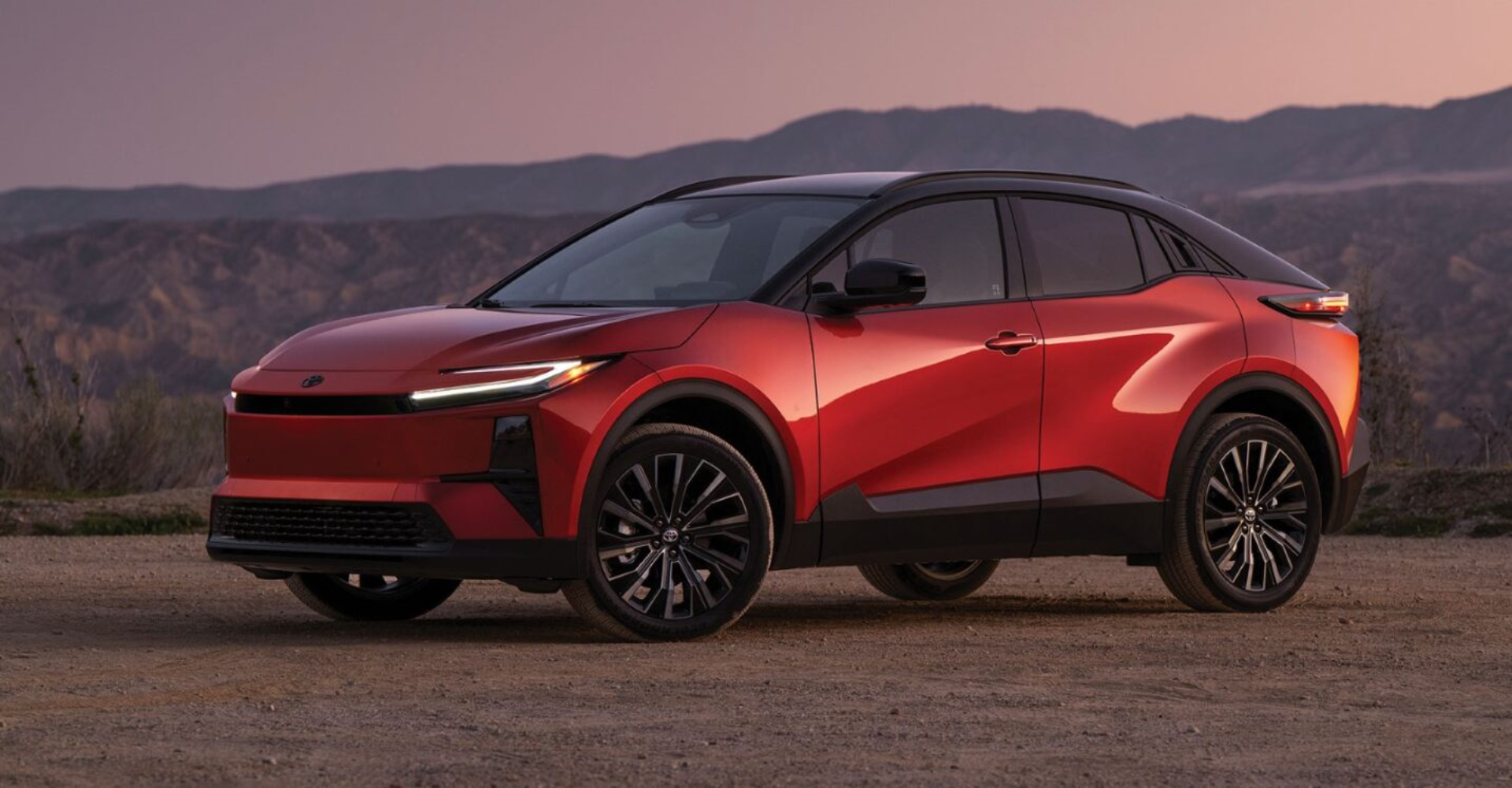
Finally, we have the return of the C-HR. Previously a funky gas-sipper, it returns for 2026 as a pure battery-electric vehicle (BEV). Built on the same e-TNGA platform, it will consist of the SEfront-wheel-drive and XSE all-wheel-drive versions. The SE makes 221 horsepower from a single motor and uses a 77-kilowatt-hour battery for an estimated 500 kilometres of range, which is properly generous for a subcompact crossover. Tick the XSE AWD box, and output jumps to 338 horsepower with about 465 kilometres of range and a 0 to 100 kilometres-per-hour time of around five seconds.
.jpg)
.jpg)
Toyota is positioning the C‑HR EV’s cabin as a step up from the outgoing car, pairing a coupe-like exterior with a more open and practical interior. Official cargo space behind the rear seats is about 719 litres, which is competitive for a subcompact crossover and should easily swallow a couple of suitcases, a stroller or a weekend’s worth of camping gear. The battery’s underfloor placement helps preserve passenger space, and Toyota says rear-seat access and headroom are improved versus the old C‑HR, even with the more dramatic roofline.
On the safety side, the C‑HR will come standard with Toyota Safety Sense, including automatic emergency braking, lane-keeping assist, adaptive cruise control, and traffic-sign recognition. Some markets are also slated to see advanced parking and driver-assist features that approach Level 2 autonomy on the highway.