


The farm also grew everything from eggplant and tomatoes to pumpkins, orchard fruits and walnuts.
“I got to see how things are made and what makes them taste good. I saw how much time and effort she put into making just a small batch of condiments. It showed me the importance of doing things right, of taking the time to learn and improve.”
Learning is a lifelong passion for Kim, who has spent the last dozen or so years travelling and cooking around Western Canada, from Edmonton to Lake Louise to Vancouver.
“I never thought about competitions before. I was always focused on improving myself,” he says. “But I have a friend who has been competing for years and had been pushing me for a long time to do it. I finally said yes after coming back from two months in Europe.”
But Kim didn’t say yes to just any competition. It was the 2025 edition of the annual Canadian Culinary Championship, one of the country’s most prestigious—and gruelling—cooking showdowns.
Signing up meant months of preparation and rigorous trial runs before the regional qualifier in Vancouver against some of the province’s top chefs. His winning dish that night also became the foundation of his gold-medal winner at the national competition, held in Ottawa on January 31 and February 1 this year.
“I do want to focus on the B.C. palate, on what grows and is produced here, so that anyone dining here gets a taste of what B.C. is all about.”
Kim credits his European holiday for some of the inspiration behind the dish. The trip, which took in parts of Spain, Italy and France, also reinforced his own views about sustainability in the kitchen.
“In Italy, from north to south, there are different characteristics in their flavours. It’s lighter and more focused on seafood in the south, with more starchy textures and heavier meats in the north. In France, I tried a dish that had braised intestines. In Korea, we also eat intestines, so it felt familiar. It’s really all about what’s local and freshest at that moment.”
That crossover of flavours and ingredients makes its way onto the menu at Vancouver’s Five Sails Restaurant, where Kim is Culinary Director. Fermented tomato water becomes the base for one dish, while a bit of gochujang livens up another.
Behind it all is a desire to connect the diner to where they’re sitting—perched practically above the downtown waterfront.
“Sustainability, for me, starts before the menu ideation stage,” Kim explains.
“The first thing I do is talk to our suppliers, ask them what they’re growing, what’s best for each season in terms of flavour and texture. Some crops, like cauliflower, are available year-round, but the best time to use them is late fall and early spring. Of course, in summer we have more fresh vegetables and fruits, but I love coming up with fall menus, because then you can spotlight a single item, like sunchoke or celeriac or beets.”

Currently, around 80 per cent of the main menu at Five Sails is made from local ingredients, while the chef’s tasting menu aims for at least 90 per cent.
Halibut and sablefish are sourced from Haida Gwaii, lamb from the Peace River region, and duck from the Fraser Valley. Even ingredients that are definitely not local, like lobster, are generally sourced from P.E.I. or Nova Scotia, rather than from Maine or elsewhere in the U.S.
“I do want to focus on the B.C. palate, on what grows and is produced here, so that anyone dining here gets a taste of what B.C. is all about,” says Kim.
“And I love working with local farmers like Cherrylane Farm in Richmond and North Arm Farm in Pemberton. I feel responsible as a chef to support local farmers and producers, so that they can grow and produce even more—and, of course, provide us with their harvest,” he adds, laughing.
That sense of responsibility was a driving force behind his winning dish at the Canadian Culinary Championship.
“My dish was called ‘Nose to Tail,’ but it was with seafood, so I actually wanted to call it ‘Fin to Gill.’”

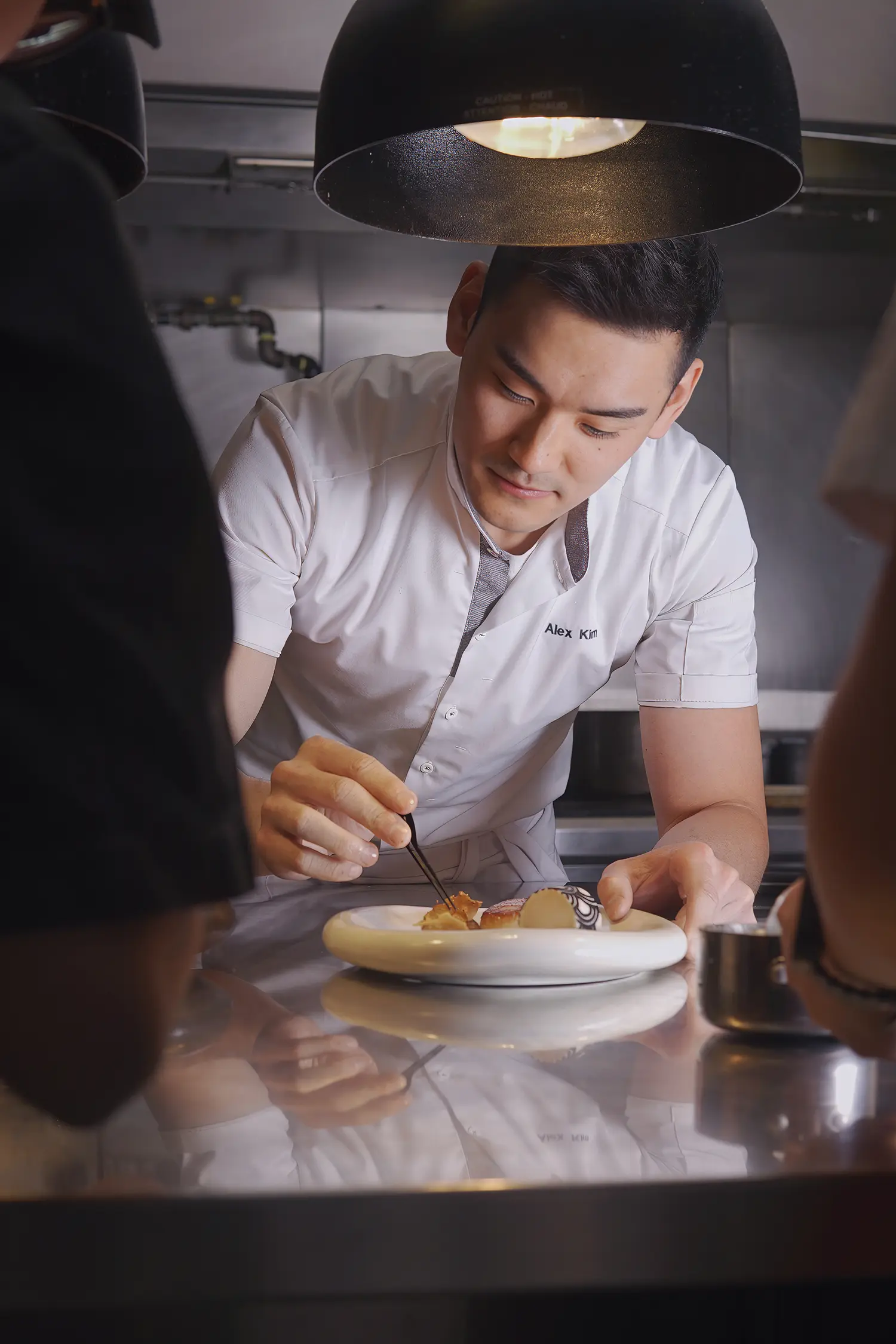
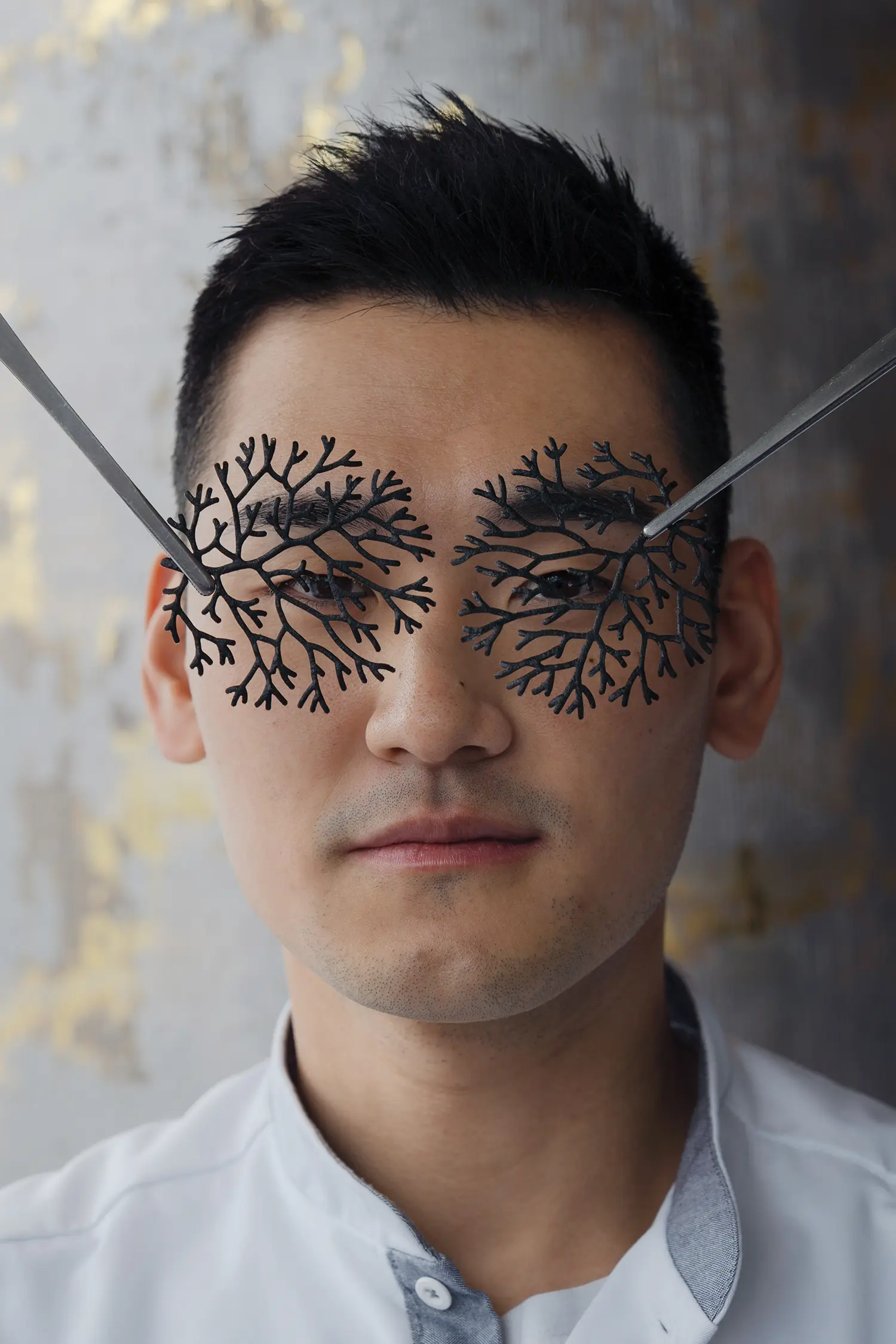
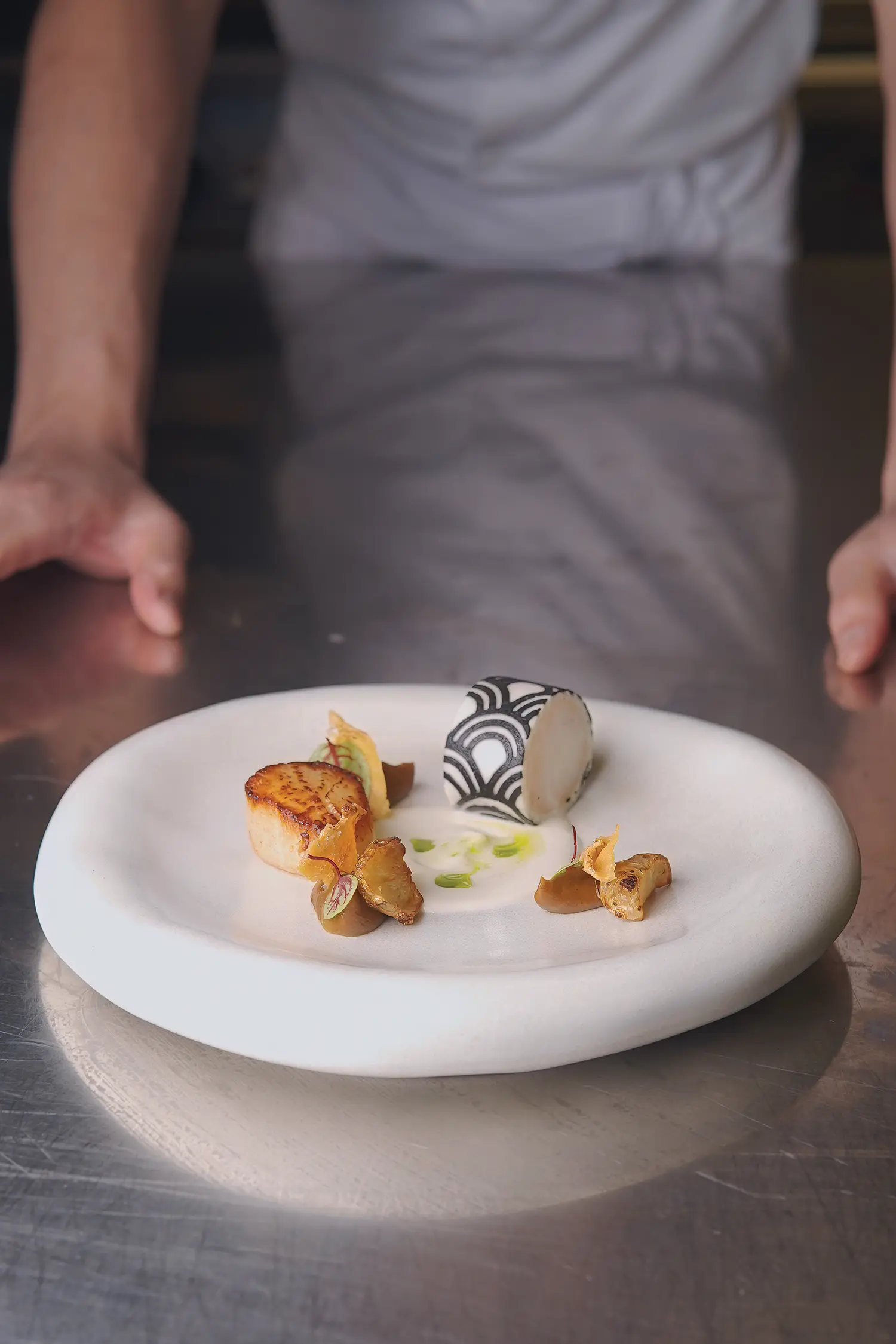
The three-part dish consisted of a fishcake made from sablefish loin paired with Cortes Island scallop mousseline, served with fermented apple-citrus emulsion, all wrapped in a delicate lattice of roasted sablefish skin.
Next to it was a dumpling of poached sidestriped shrimp and Dungeness crab with Okanagan apple salad. The dumpling skin was glazed with a consommé gelée made from the heads, bones and tails of the sablefish and shellfish stock.
The final, mind-blowing element was a clever take on a traditional lettuce wrap: seared sablefish belly and Kisu oyster from Denman Island flavoured with Korean soybean paste.
Instead of lettuce, the base was an “oyster” pastry shell made from sea lettuce, flour and carbonated water, painted and flavoured with squid ink and sea lettuce to create the craggy texture of a real shell.
“I wanted it to have the light crispiness of tempura, but with the durability of a proper shell,” says Kim.
It was a dish that not only won the judges’ approval, but also became the People’s Choice winner.
The competition was also a way to promote Kim’s other focus: supporting the next generation of chefs.
“Mentorship is connected to my work style. I feel joy when I see one of my junior chefs become chef de partie, for instance, or my sous chef become chef de cuisine or executive sous chef,” he says.
“I want to spend more time developing the skill sets and knowledge of my team, rather than just hiring externally. The team suggests items for each menu. Their opinions matter. We taste and discuss ideas together.”
“I believe you never master cooking; you’re always learning something new, some new style of cuisine, a new culture.”
As for the future, Kim doesn’t rule out further competitions, but he’s more focused on what he wants to accomplish with his team.
“I believe you never master cooking; you’re always learning something new, some new style of cuisine, a new culture,” he says.
“There are so many chefs out there doing innovative and new things. I want to keep learning, become a better chef, a better leader. We invite high school and college-level culinary students to show them what we do, and also show them the real world of the culinary industry at every level.”
“I feel we are also responsible for changing the culture of the professional kitchen from the old ways, to create better environments for incoming chefs. My personal goal is to be part of this—to be impactful and help young chefs develop.”