

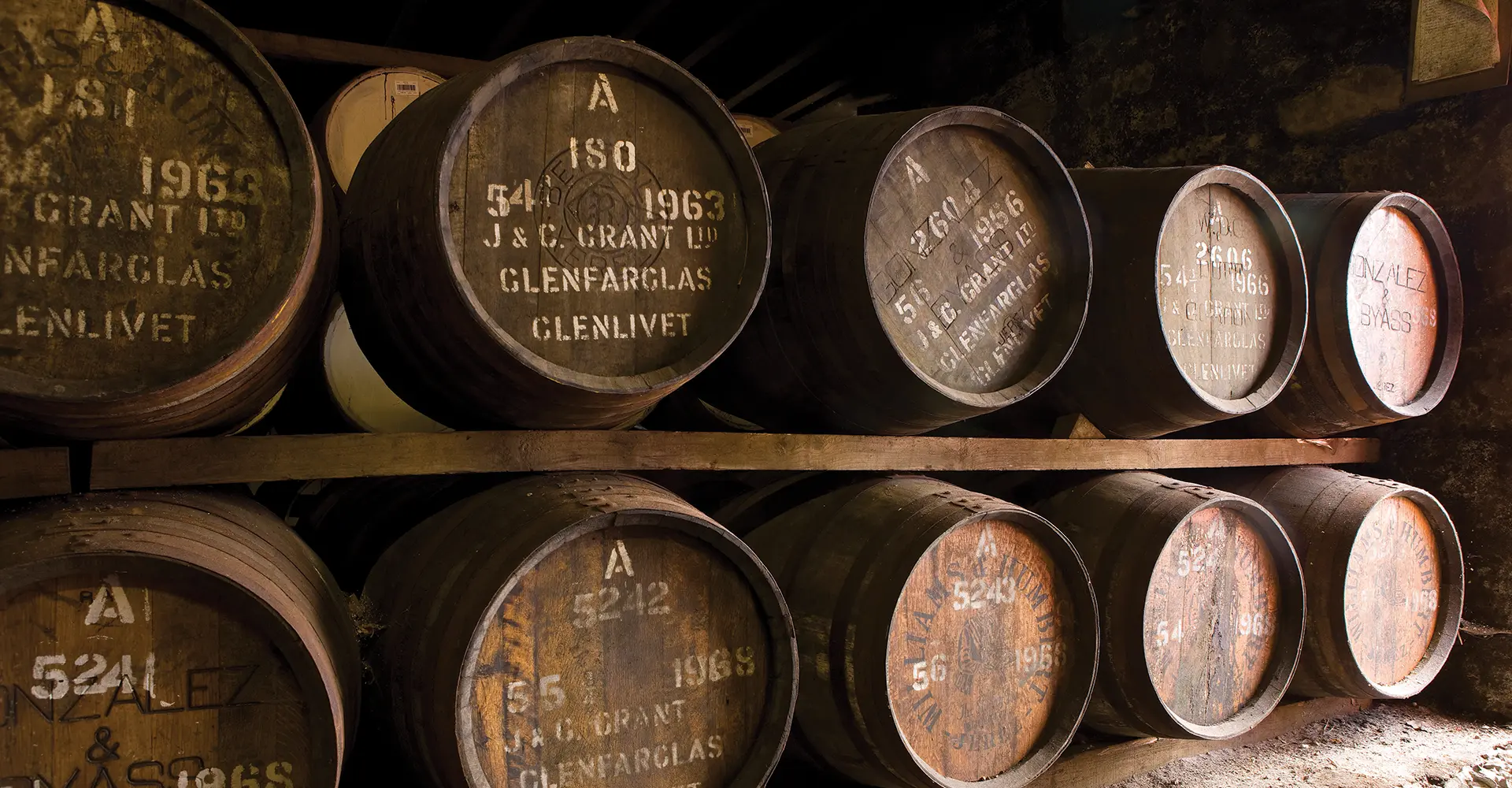

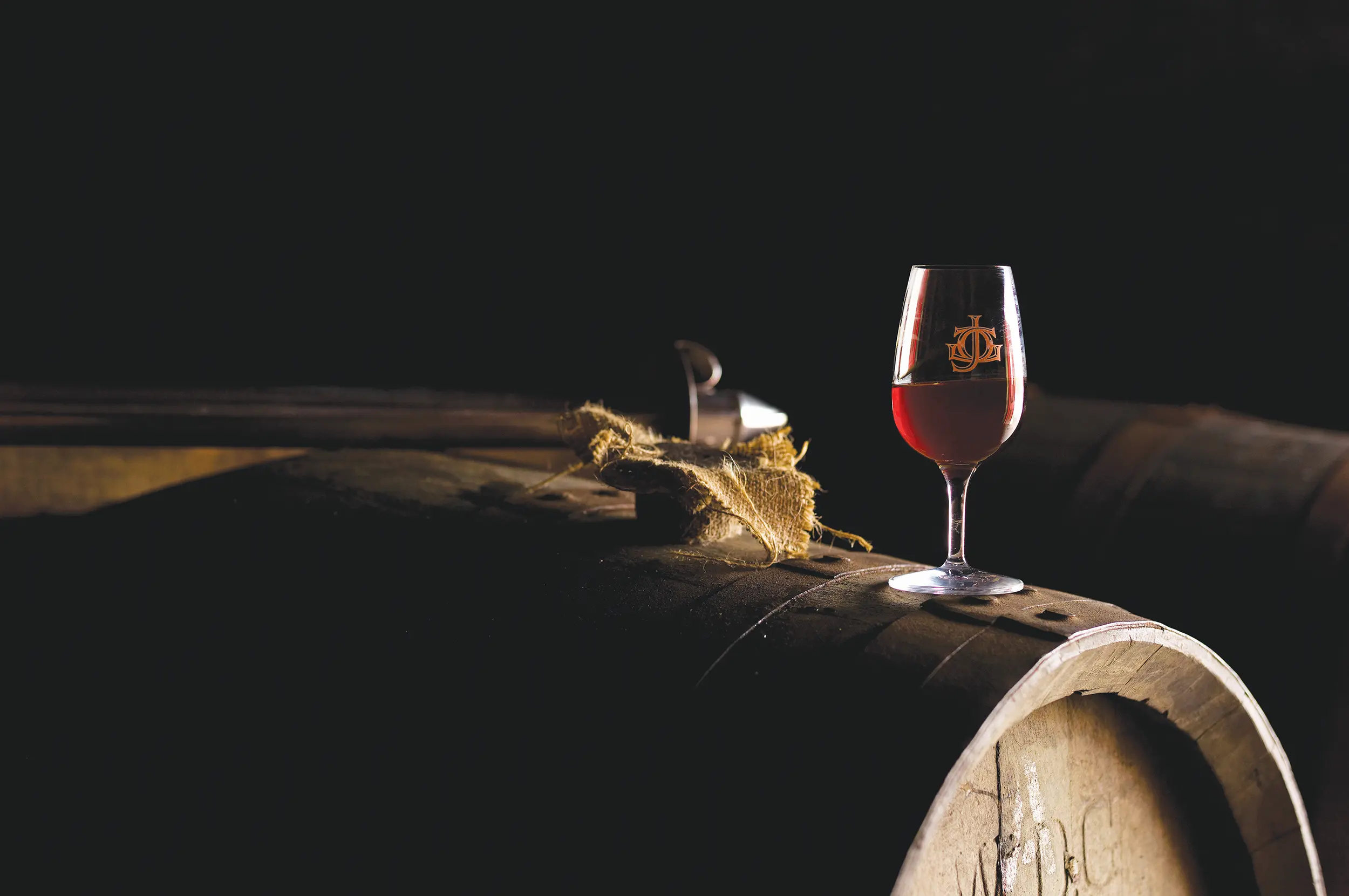
Glenfarclas 25 Highland Single Malt Scotch Whisky
Tasting notes: Dark auburn-amber in the glass, with aromas of marmalade, mocha and nuts. Honey, candied peel and fruitcake flavour the palate, finishing with dark chocolate on a long finish.
Drink it… At room temperature, adding just a few drops of water, with dark chocolate on the side for nibbling.
Glenfarclas has remained family-owned since 1836, giving it the edge of consistency in producing ultra-mature malt Scotch. The number on a Scotch label represents the youngest whisky in the bottle, and while 10- and 12-year-old bottlings are common, Glenfarclas is renowned for its ultra-mature bottlings—particularly 25.
“Today, we had someone who brought in a bottle of Glenfarclas 25 from the 1980s, which would have been distilled in the 1950s,” Duncan Grant, Head of Sales, tells me over the line from Scotland’s Speyside whisky region.
Tasted against today’s Glenfarclas 25, “There were so many similarities,” he says.
We make it harder for ourselves by sticking to all these traditions
While other distilleries have chased modern methods, “that just shows we’re perfecting a craft. We’ve got our distillery team using their skill—their own eyes, nose and taste—to make whisky.”
Glenfarclas’ delightfully old-fashioned methods add up to high-quality, maturation-worthy whisky. The distillery’s malted-barley mash undergoes a long fermentation using a bespoke strain of yeast to create complex aromas and flavours.
Its unusually large copper-pot stills are directly heated—rather than using the more common indirect steam—developing the toffee notes and rich texture that make the spirit suitable for long maturation.
The distilled spirit then rests for decades in stone dunnage warehouses in massive Oloroso sherry casks. Some Scotch spends just months “finishing” in sherry oak; at Glenfarclas, the whisky spends its whole life acquiring sherry’s decadent nut and candied-fruit notes.
“Twenty-five years is a sweet spot,” says Grant, for balancing a sherry cask’s influence on single-malt Scotch.
Callum Fraser, the distillery manager at Glenfarclas, explains that casks are hand-tasted and blended in small volumes, and that the brand “over-ages” its whisky. In other words, much older spirit may be blended in to achieve the colour, aroma and flavour that defines Glenfarclas 25.
It’s bottled at a slightly higher strength to avoid chill-filtering—a common commercial practice that ensures crystal-clear whisky but that many believe strips away flavour.
“We make it harder for ourselves by sticking to all these traditions,” says Grant, “but we hope it allows us to become the gold standard for these older expressions.”
Fraser takes pride in barreling spirit today that will become 25-year-old whisky for the next generation.
“I want my grandchildren to be able to come in and ask to taste whisky I put down in 2025. That’s the romance of it all: to create a legacy.”
.webp)
.webp)
.webp)
Fonseca Vintage Port 2000
Tasting notes: Deep purple-black in colour, with opulent blackberry, plum, floral and spice aromas. Velvety and rich on the palate, it has the structure of grippy tannins and a long, fruity finish.
Drink it… Decanted to filter out natural sediment, and served with dried apricots or figs and blue-veined cheeses.
In the Douro Valley of Portugal, small harvests from the best vineyards of promising local grape varieties are fermented and fortified with spirit to become port.
They’re aged in massive oak casks called port pipes. Two years after harvest, only the finest wines are selected and blended to create a vintage port destined for long aging.
Every bottle of Vintage Port expresses the exceptional quality of a particular year
“They need two winters to show their full potential to enter a vintage-port blend,” explains David Guimaraens, a sixth-generation winemaker at Fonseca, founded in 1815 and renowned for lush, intense vintage ports.
The blend is then bottled and cellared again. Only after 10 years or more of bottle aging will it be released as Vintage Port—a luxury drink that can continue to mature and improve for decades.
Youthful berry notes and firm tannins define young vintage port, says Guimaraens. By 25 years, a more mature character emerges, which he describes as spicy, marzipan-like tones.
“As the fruit diminishes, the bottle-maturity aromas intensify,” he explains.
Throughout decades spent in dark bottles deprived of oxygen in cool cellar temperatures, the port acquires “silkiness and finesse,” says Guimaraens.
“At 25 years of age, the expression of quality and balance of age is captured to perfection.”
Today, purchasing a 2000 Fonseca Vintage Port for a 25th birthday, anniversary or graduation is a relatively affordable gift—around $200 CAD.
“Every bottle of Vintage Port expresses the exceptional quality of a particular year, as well as the skill of the port producers, often acquired over generations,” says Guimaraens.
“Sharing this as a gift—or splurging on yourself with one—will always create a memorable moment.”
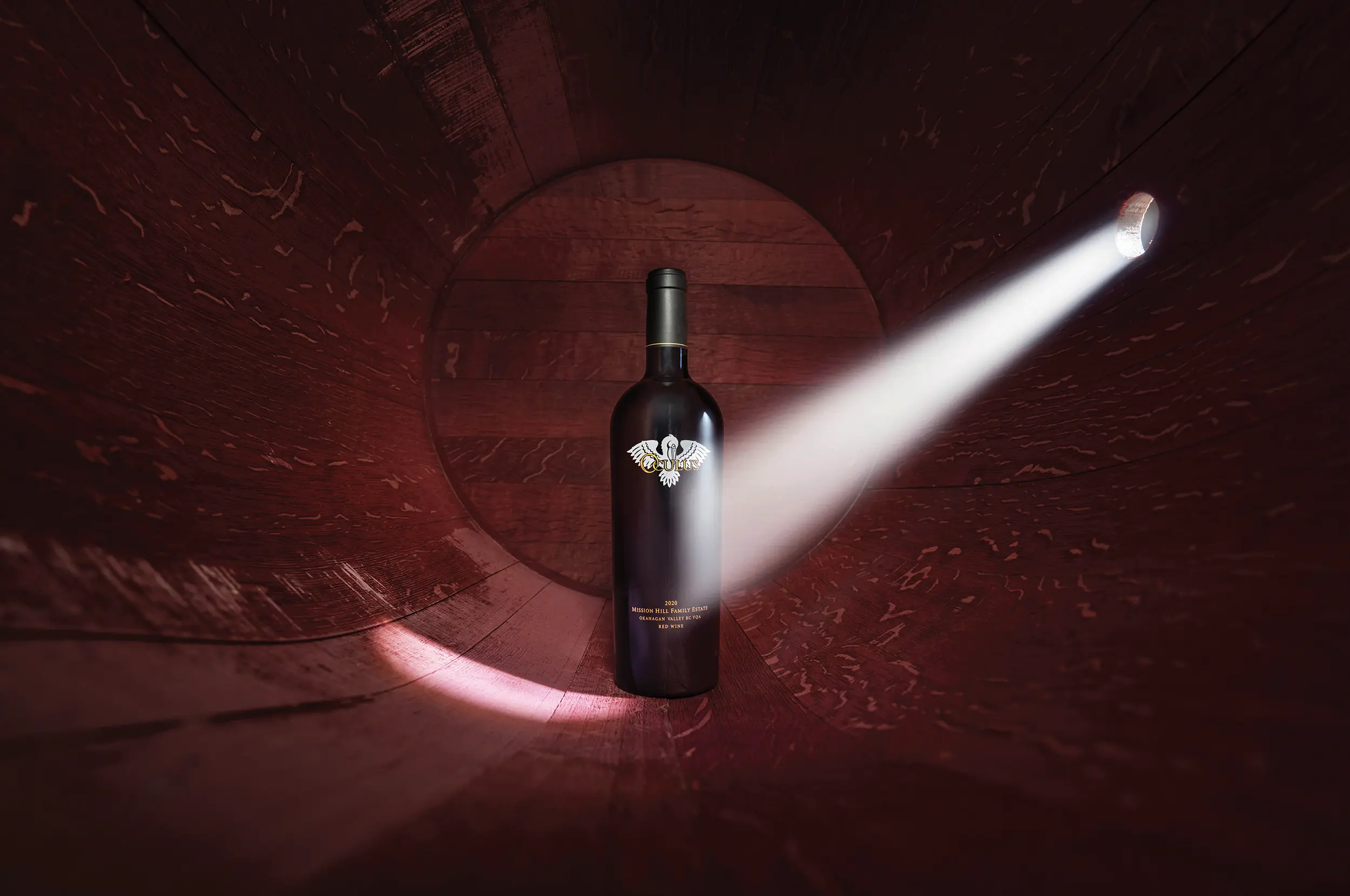
Mission Hill Family Estate 2000 Oculus
Tasting notes: On a soft palate, expect delicate florals, dried citrus and other fruits, earthy and leather tones, plus herbs and baking spices, creating a long, savoury finish with a subtle miso accent.
Drink it… Right after decanting, with mushroom risotto, roasted lamb or beef.
Twenty-five years ago, the B.C. wine industry was experiencing a growth spurt, with dozens of new wineries and vineyards staking out territory.
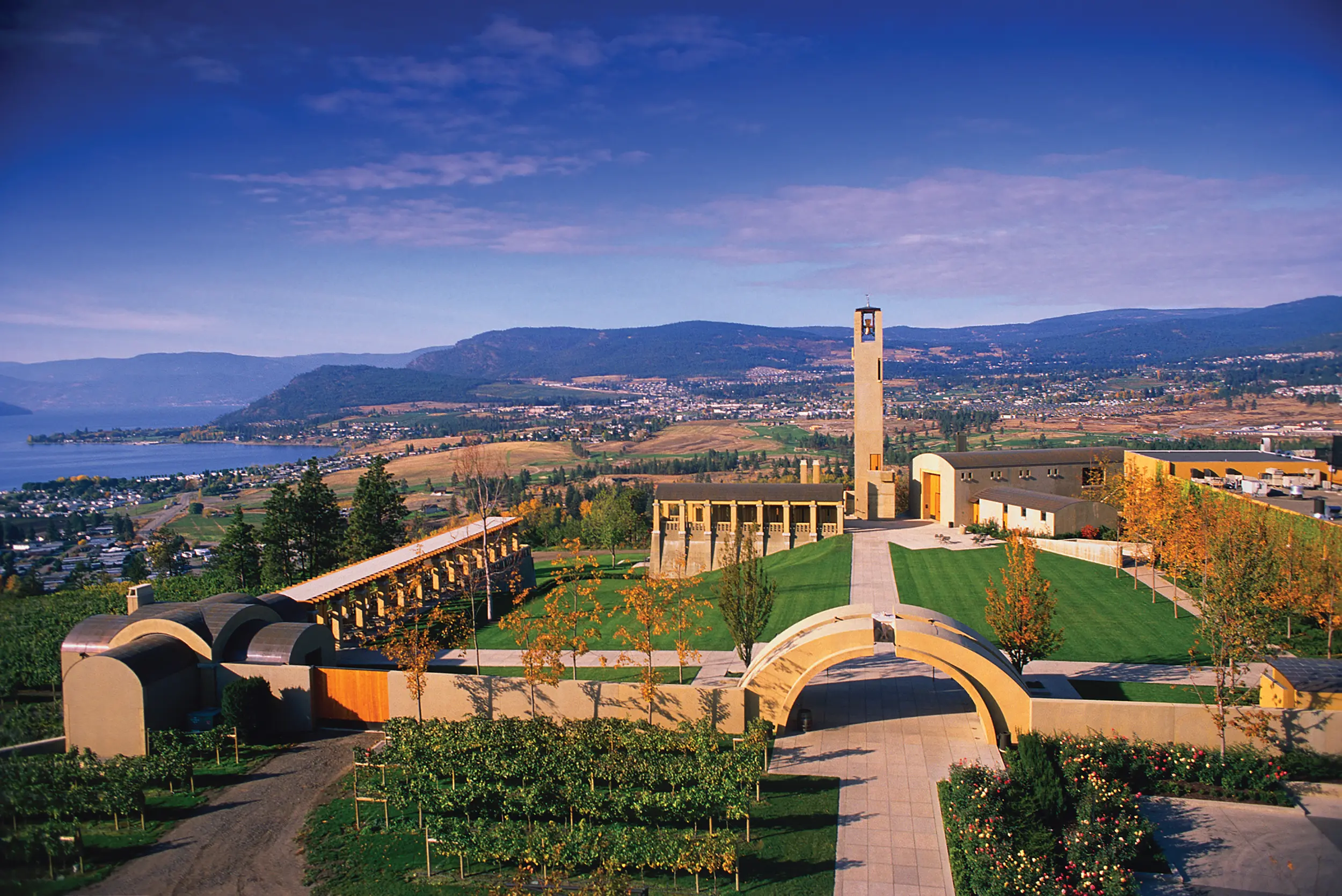
Mission Hill Family Estate—established in 1966 and purchased by visionary owner Anthony von Mandl in 1981—has always viewed B.C. wine through a far-future lens.
In the autumn of 2000, the team selected the best Merlot and Cabernet Sauvignon grapes to create a wine intended for the ages—one that would redefine fine B.C. wine and stand comparison with Bordeaux-style reds.
The wine was called Oculus, and the year 2000 marked only the third vintage produced.
“This wine is made to be aged,” says Taylor Whelan, who became Mission Hill Family Estate’s chief winemaker in 2024 after more than a decade at sister winery Cedar Creek.
“Significant tannins, slightly elevated acidity and low vineyard-cropping levels enhance fruit concentration, allowing this wine to age gracefully.”
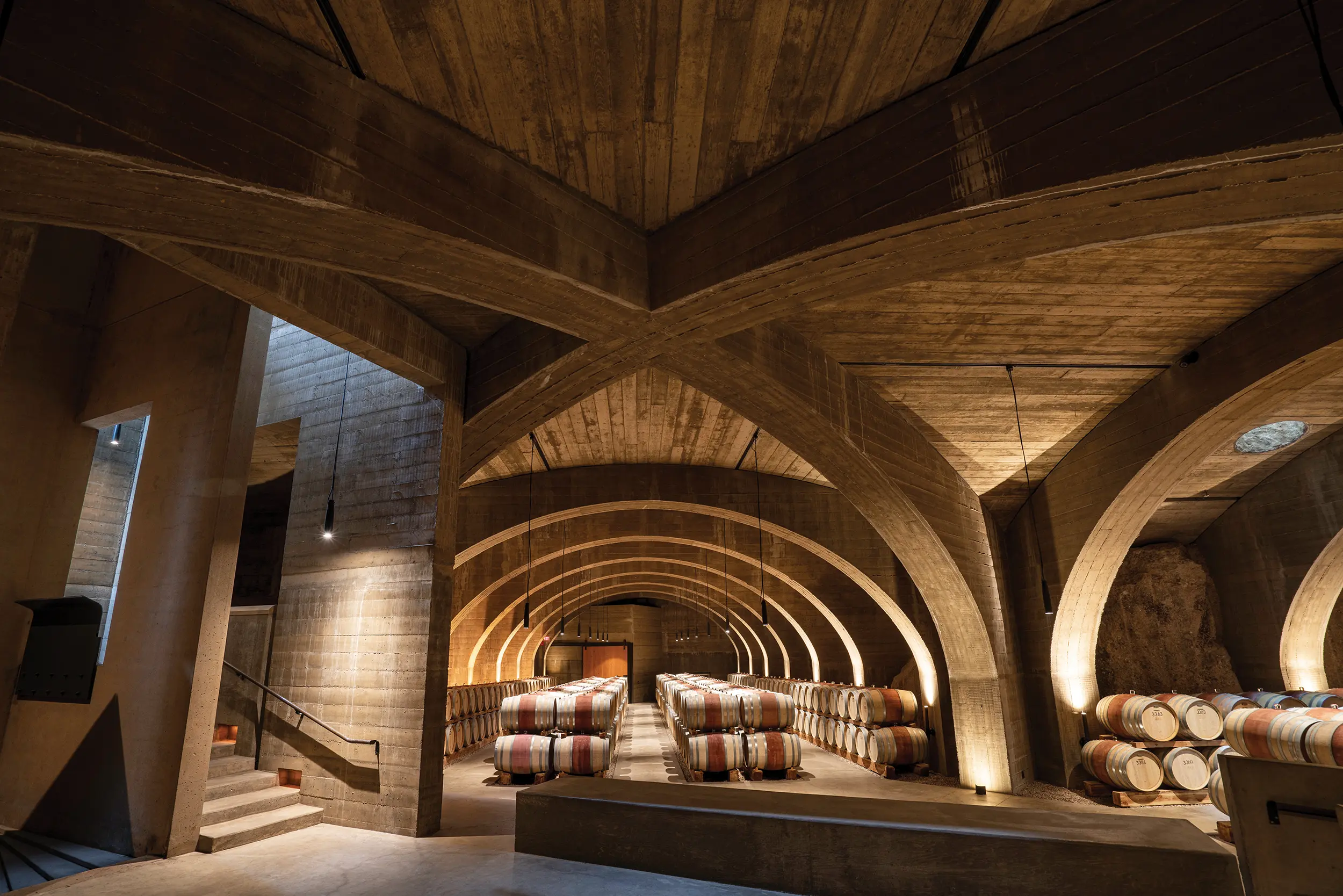
It’s bottled after a long, cool, 20-month rest in French oak barrels.
While global statistics show that nine out of 10 bottles of wine are consumed within 48 hours of purchase, Oculus has the potential to bottle-age for decades.
Cellar conditions are key, Whelan says.
“Ideally, a dark, high-humidity environment will keep the cork in good condition and allow the wine to age slowly. The warmer the storage conditions, the faster the wine will age.”
Whelan invokes the wine term “tertiary”—aromas that emerge after primary fruit and fermentation flavours—to describe the leathery, dried-fruit, spicy and savoury character of a 25-year-old vintage.
“Try aged wines before embarking on your own cellaring journey,” he advises, to ensure you enjoy the style of ultra-mature wines.
Mission Hill Family Estate holds back cases of old wine, including Oculus vintages, in its library for long-term aging. The estate forgoes revenue and absorbs the costs in order to trace the evolution of B.C. wine artistry.
“It’s worth it!” Whelan declares.
The 2020 Oculus vintage recently earned a perfect 100-point score from legendary Canadian wine writer John Schreiner—meaning demand for these limited-quantity wines will only continue to grow.