

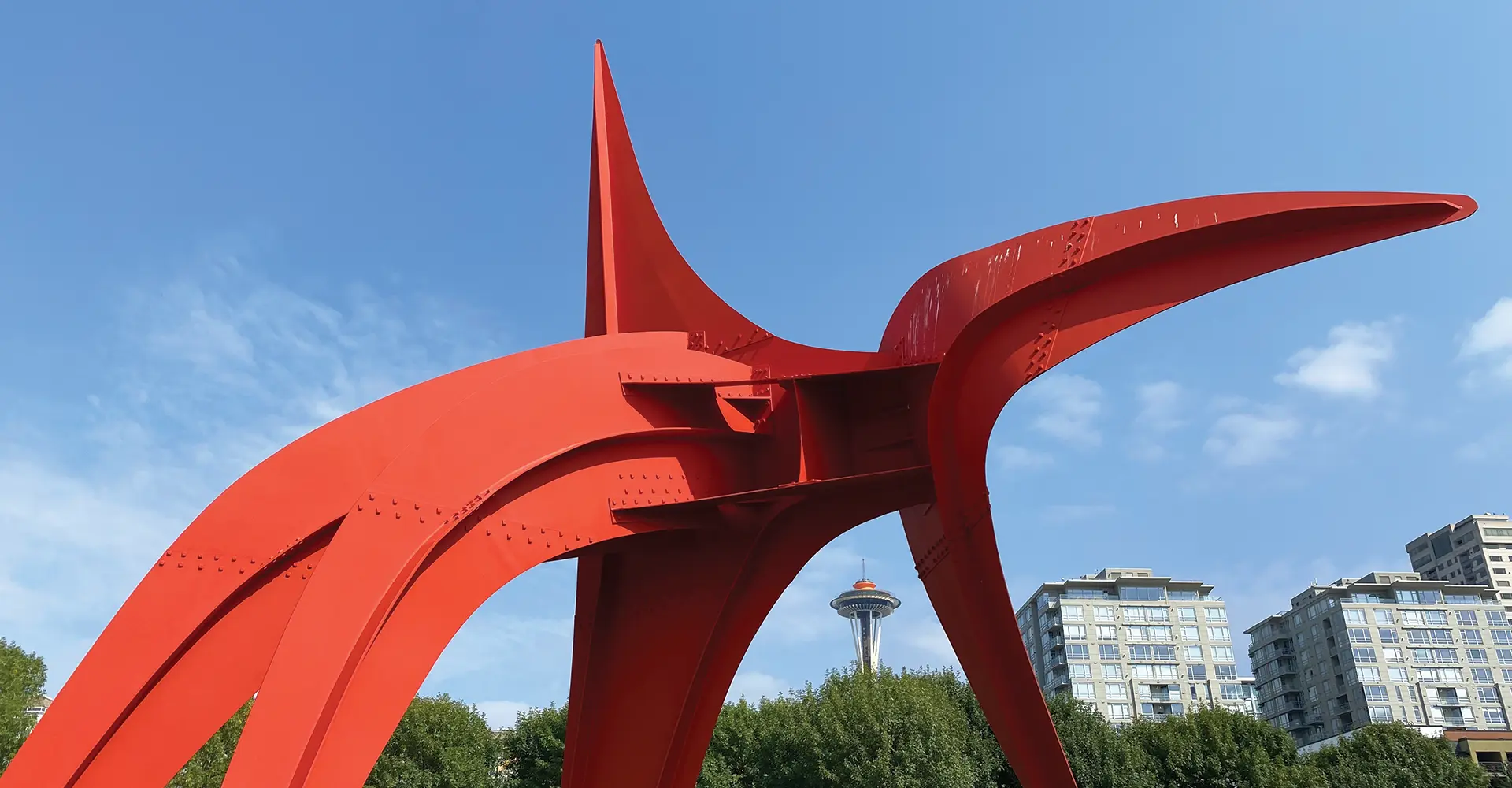

In 1995, Seattleites were presented with a proposal for a 25-hectare park in the South Lake Union neighbourhood. While the lake had been the ancestral territory of the Duwamish and other Coast Salish Peoples for thousands of years, after colonization its southern shores became a mix of heavy industry and low-income housing.
The vision was to create Seattle’s version of Central Park, a kind of urban village in the city’s geographic centre called the Commons, with a mix of public open-air recreational facilities and natural water features. But it was voted down, despite the support of philanthropic organizations and late Microsoft co-founder and billionaire Paul Allen. A local columnist and board member of the Commons, John Hinterberger, wrote at the time, “I never thought I’d have to persuade people in the Northwest of the virtues inherent in growing trees, open meadows and green grass.”
In Seattle, a panoply of lush parks led to it being nicknamed the Emerald City.
Although this original proposal didn’t happen, it did spur the formation of the Seattle Parks Foundation (SPF) a few years later. And since then, for a quarter of a century, the non-profit has helped fund and advocate for the conservation, expansion and improvement of Seattle’s parks, as well as increase community support. Some 300 grassroots projects have come to fruition, including Lake Union Park, a scaled-back 5-hectare iteration of the Commons that opened in 2010 to preserve public access to the lakeshore. It’s now one of almost 500 parks in the city.
But for current SPF president and CEO Rebecca Bear, it’s Duwamish Waterway Park that stands out as a key achievement of the last 25 years. This riverfront park was created in a neighbourhood with minimal access to public spaces and a disproportionate amount of safety and health issues, as well as pollution and noise.
“The work to revitalize Duwamish Waterway Park resulted in meaningful change for the entire community, and had additional benefits of buffering the neighbourhood from the impacts of climate change,” says Bear. She’s also proud of the foundation’s role in a public-parks levy that has contributed more than a billion dollars to public spaces over the last 15 years, as well as “funding for the health and vibrancy of our parks and public spaces.”

We will ensure that everyone feels welcome and that people of all abilities can enjoy parks.
Asked what the SPF’s goal is for the next 25 years, Bear again mentions equity in public spaces and nature-based climate solutions.
“By building urban resilience through an increased tree canopy, transforming hardscapes to greenscapes and localizing food systems, we will see lower heat indexes, reduced heat islands and a decrease in fossil-fuel use,” she says. “And by fostering inclusive communities through universal design, creating safe routes to parks and providing amenities that enhance connection, we will ensure that everyone feels welcome and that people of all abilities can enjoy parks.”