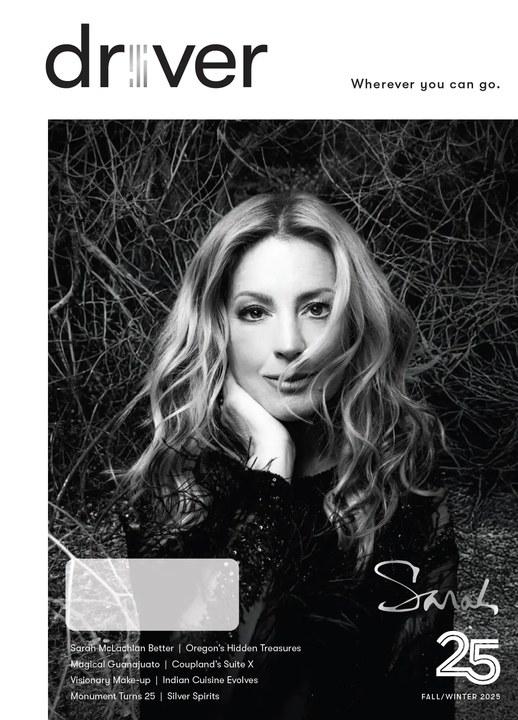


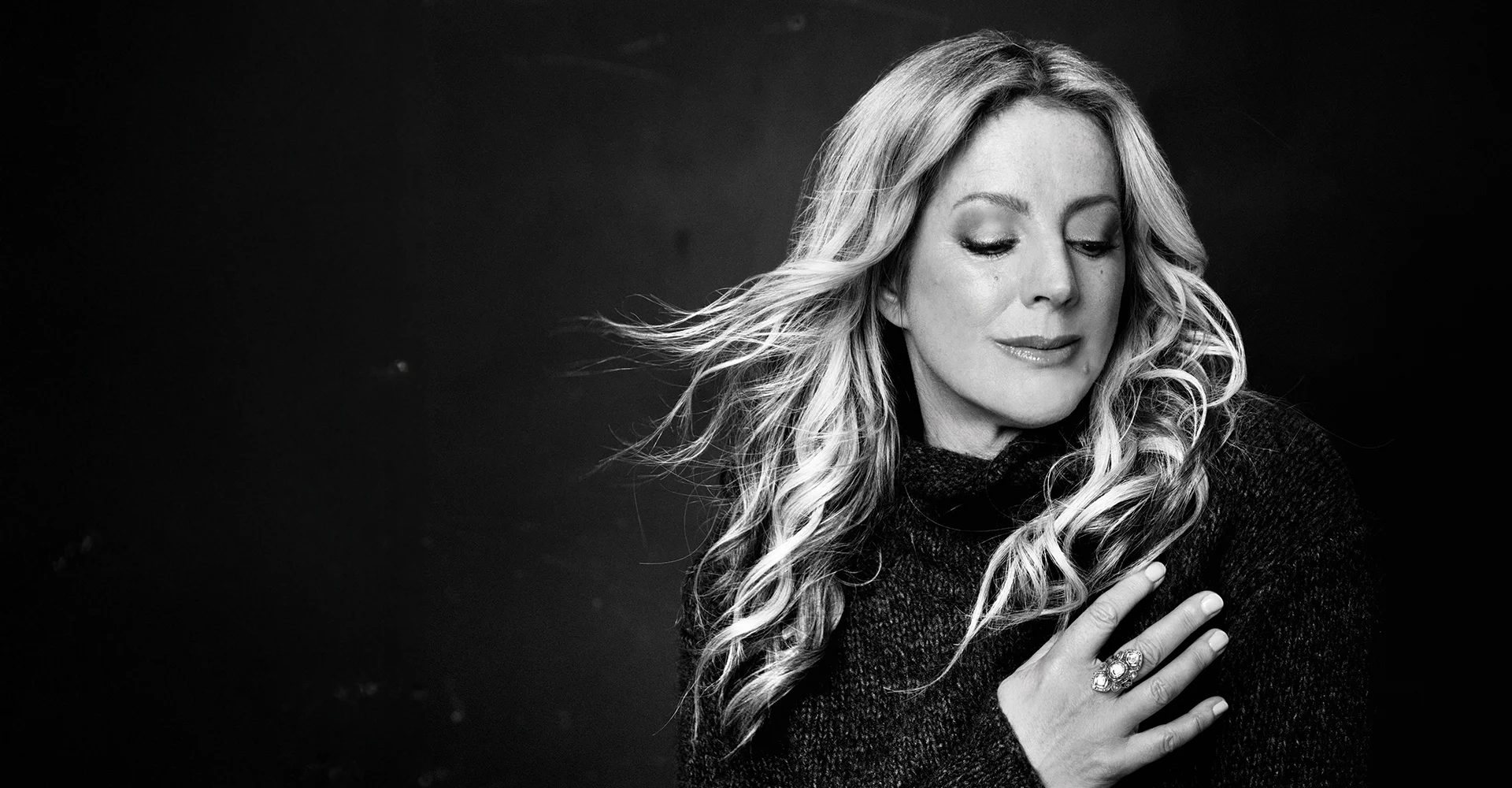

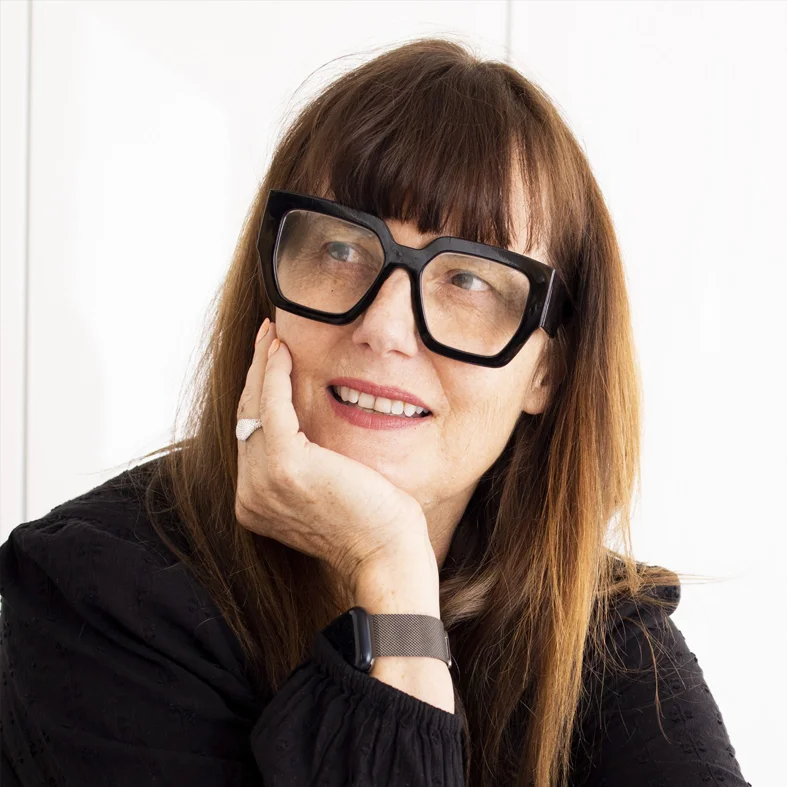
Now, past and present are converging for the 57-year-old Canadian music icon. She has a new album, Better Broken, hailed as her strongest since her prime. She’s promoting it this fall while finishing the final leg of a wildly successful tour celebrating more than 30 years since the release of her breakthrough album, Fumbling Towards Ecstasy. Finally, there’s a documentary about her groundbreaking Lilith Fair tour of the late 90s, now airing on CBC Gem.
Fans had reason to wonder if McLachlan might ever put out a new album. “I have never been prolific,” says the songwriter. “It usually takes me months, if not years, to finish a song.” Better Broken is only her seventh album since the 1987 debut, Touch, released when she was a 19-year-old ingénue.
When McLachlan decided she finally had enough songs for anew record, she thought it might be her last. And if so, she felt she owed it to herself to shake things up a bit. That meant parting ways with producer Pierre Marchand, with whom she’d worked consistently since 1991. She insists they’re still very close.
But judging by the re-energized sound of Better Broken, which was made in L.A. with Boy genius producer Tony Berg, there definitely were cobwebs to be cleared. That’s obvious from the title track—also the first single—in which a slightly detuned piano sounds like it’s underwater, overtop a slinkier groove than we’ve heard from McLachlan in at least 25 years.
“Reading the news, I’m watching the world implode all around us, and then there’s this erosion of women’s rights. You just don’t know how far things will go. But as a mother, as a humanitarian, as a woman, as an artist, I have to say something about this. I’m angry, I’m deeply concerned, I’m troubled. But also, I love people, I love humanity, and I’m working on staying really optimistic, because I am by nature.”
Then there are the lyrics. McLachlan has long admitted that lyrics are the hardest part of songwriting for her, because she needs to feel personally invested. But being a woman in her fifties has provided more than enough inspiration: divorce, death of parents, raising teenagers, bitter breakups—and the declining state of the world. It’s a time when, as she sings, “The only way out is through.”
Better Broken is her most lyrically direct work to date. There’s the ache of a parent’s unconditional love for a troubled child on “Gravity.” There’s the plea for political uplift in “Rise.” There are three songs that rage at an ex, including the uncharacteristically profane “Wilderness.” And, of course, plenty of songs about healing and comfort, because that’s what Sarah McLachlan does.
McLachlan herself says this collection of songs can induce “emotional whiplash,” but that’s what midlife is all about. “Nobody gets out unscathed,” she laughs again. If there’s an overarching theme to Better Broken, she says, “it’s reclamation. Who am I now? I was a very active mother for the last 24 years, and now I’m an empty nester. My role is shifting, and I’m in an amazing place. I’m really happy and very lucky and very grateful.”
That optimism was challenged in McLachlan’s personal life, as she speaks of recently experiencing “loss and grief and shame,” which she needed to work through before re-entering the public eye and sharing songs that reveal her vulnerabilities. That’s particularly the case with the song “Wilderness,” about an infidelity that broke her last relationship, and about how it was public knowledge to everyone but McLachlan herself.
“The shame that I carried around for a good chunk of time was devastating,” she admits. “Why in the world did I stay so long? Why did I allow that to happen to me? And what the hell am I feeling shame for? It’s easy for me to talk about it now, because I’m so on the other side of it. But there was a time when I didn’t want to leave the house, because I was concerned that I might run into them.”

She did, of course, leave the house. Just because she wasn’t releasing new music didn’t mean she was resting on her laurels as a ’90s superstar. For almost 25 years, she’s been spending her capital—both financial and social—by investing most of her fortune and a lot of her time into the Sarah McLachlan School of Music.
In 2000, McLachlan exhaled after 12 years spent building her career, culminating with three years as headliner of the multi-artist Lilith Fair, the highest-grossing North American tour at the time. On top of its artistic and commercial triumph, Lilith Fair raised more than $7 million for national and local charities. “That really galvanized my purpose,” she says, realizing she had “this amazing platform, and the ability to give back, and how good that feels.”
So, she took her Lilith profits and invested them in an eponymous foundation. “But I wasn’t sure what I was gonna do with it,” she says. That’s when she started reading about cuts to music programs in public schools. She thought about how, when she was a youth, music was “the one thing that kind of motivated me and kept me going, and gave me a sense of my own self-worth and a purpose.”
“It was very classical and very strict,” McLachlan says of her childhood training. “Though it gave me a good foundation for theory and musical understanding, I didn’t really enjoy it. And I never thought about music or life competitively.”
She didn’t want to deal with school boards directly, knowing that negotiations could get mired in all kinds of bureaucratic politics. She was hoping she could invest in an existing nonprofit program—only to learn that there weren’t any at the time. In Vancouver, she sought the help of Arts Umbrella, which had the mandate she was looking for in arts other than music. With their help, the Sarah McLachlan School of Music was launched as an after-school program for youth. It now has three campuses: two in Vancouver and one in Edmonton, with plans for expansion.
The music schools are linked with Vancouver’s Douglas College and Edmonton’s MacEwan University, but McLachlan’s primary goal was that they wouldn’t reflect the Royal Conservatory approach that she had grownup with, or the Kiwanis Music Festival competitions she enrolled in as a kid.
“It was very classical and very strict,” she says of her musical training. “Though it gave me a good foundation for theory and musical understanding, I didn’t really enjoy it. And I never thought about music or life competitively. I have this woo-woo utopian ideal that I’ll live and let live, and there’s room for everybody and different ideas. So, if I’m going to create a music program, I want to meet kids where they’re at, figure out how to reach them, and keep them engaged.”
Before she joined the short-lived October Game as her firstband, her musical experience was very isolated as a teenager growing up in Halifax. She says, “I found joy every day in just putting my fingers on a musical instrument and playing for the sake of playing, for the joy of abandonment, not to learn this particular piece or to hone skills. I discovered that feeling at four years old. My earliest memories were singing. I sang all the time.”

“I grew up with two American academics, who were rather isolated themselves. They didn’t have a lot of friends, there was nobody coming around visiting the house, there was no music in the kitchens”—despite livingin a Maritime province, where kitchen parties are a musical tradition. Instead, the McLachlans “ate dinner in silence and then scurried off to our corners to avoid fights. It wasn’t a happy house. Music was my comfort. It was for my brothers, as well. All of us, we just sort of dove into music. That was our escape.” She wants her music school to provide that escape for others.
“Music is the only reason I stayed in school,” she continues. “We need citizens who have empathy and social-emotional awareness. Music nurtures all those things, as well as academic growth. Plenty of studies prove that a minimum of two years of music education ups your cognitive skills. One of the things that we’re super proud of is our high-school graduation rate is higher than BC’s average.”
If the Sarah McLachlan School of Music was funded in part by the original Lilith Fair, that raises the obvious question: Would she stage the festival again?
Even Better Broken’s producer, Tony Berg, posed that question to her, saying he was positive that the hugely popular Boy genius would jump at the chance to join.
McLachlan told Berg that’s not her job anymore, and that maybe it should be Phoebe Bridgers’, or Brandi Carlile’s, or Taylor Swift’s—all of whom have created communities of chart-topping female performers like Lilith once did. Besides, a revival would carry too much baggage. An ambitious but aborted attempt in 2010 led to McLachlan severing ties with Vancouver’s Nettwerk Management, which had guided her career since she was a teenager.
“Music is the only reason I stayed in school. We need citizens who have empathy and social-emotional awareness. Music nurtures all those things, as well as academic growth.”
“I honestly always thought if something like Lilith were to happen now, it should really be championed by an artist of today, who will be able to bring a different energy to it, which I think it would need,” she says.“It feels redundant for me to bring back the same thing.”
McLachlan has no qualms about bringing back Fumbling Towards Ecstasy, however. It’s an album that, after its 1993 release, she toured for three gruelling years in an attempt to break the U.S., long after her record label there had given up on it. The strategy paid off, making her the international star she is today.
Because that album is so central to her core fanbase—as opposed to, say, her 2007 multi-million-selling release, Surfacing—she felt she had to honour it for her fans.
“These people have such an attachment to this record. I feel that when I’m on stage,” she enthuses. “I’m tapping into something that’s way bigger than me.”
Last fall, however, her body didn’t agree with her. In October 2024, she contracted a virus and lost her voice, forcing her to cancel the final leg of the tour.
“I’d never done anything like that in my life, and I’ve been doing this for 38 years,” she says. “I’ve only cancelled three shows in my life! I take steroids, I push through. But I couldn’t push through this. I did damage. I couldn’t sing for about three months, and then I went on vocal rest for six months.”
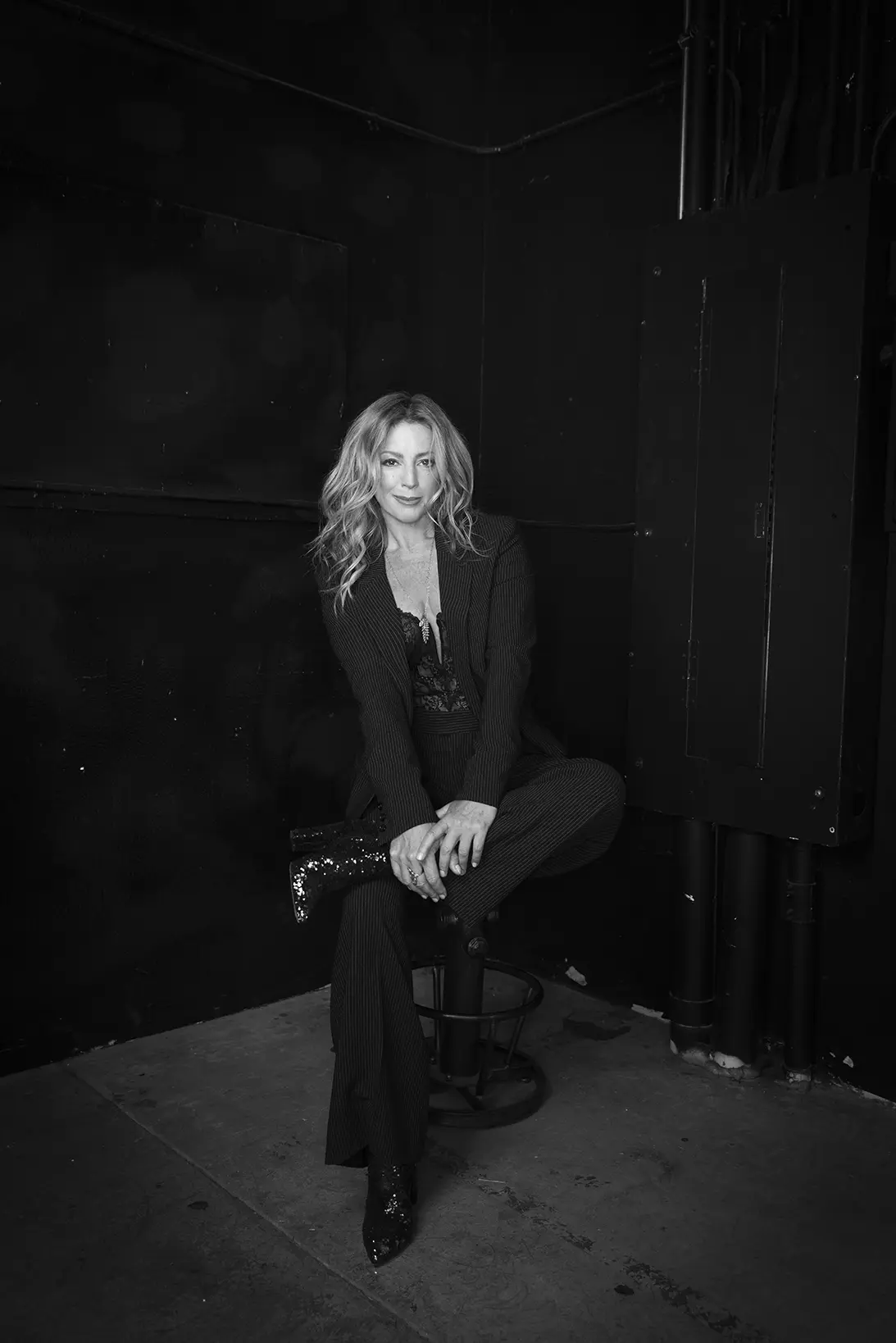
Better Broken was already finished, but she feared she might never be able to perform it. When she did recover, she rebooked the cancelled dates, at which she’ll still play Fumbling Towards Ecstasy, with just a few songs from the new album she’s ostensibly promoting.
“Who cares?” she laughs again. “As an artist, I always want new material, but I know that my fans want the songs they know and love. I’m not like Bob Dylan, who refuses to play any of his old material. I like throwing fans lots of bones, because they’ve been steadfast in their support and love for me all these years, so it just makes sense.”
After this album cycle is done, McLachlan feels that her life is wide open and ready for the next chapter. One thing she does know: as a 57-year-old, she’s going to make the most of her physical health while she can.
She’s owned a beachfront property in Tofino for more than 20years, and surfs every day she’s there. In the winter, she’s looking forward to skate-skiing.
And after that?
“I’ll continue to work with the school. I still am wearing these other hats, but I will actually have way more time to write and do other things. I’m in the beginning stages of this new part of my life where I have all this time and space. Check back in a year; we’ll see.”
As for the idea that Better Broken could be her last album?
“I’m over that,” she says. There’s too much fun to be had.
“I have a very different attitude toward it now.”