


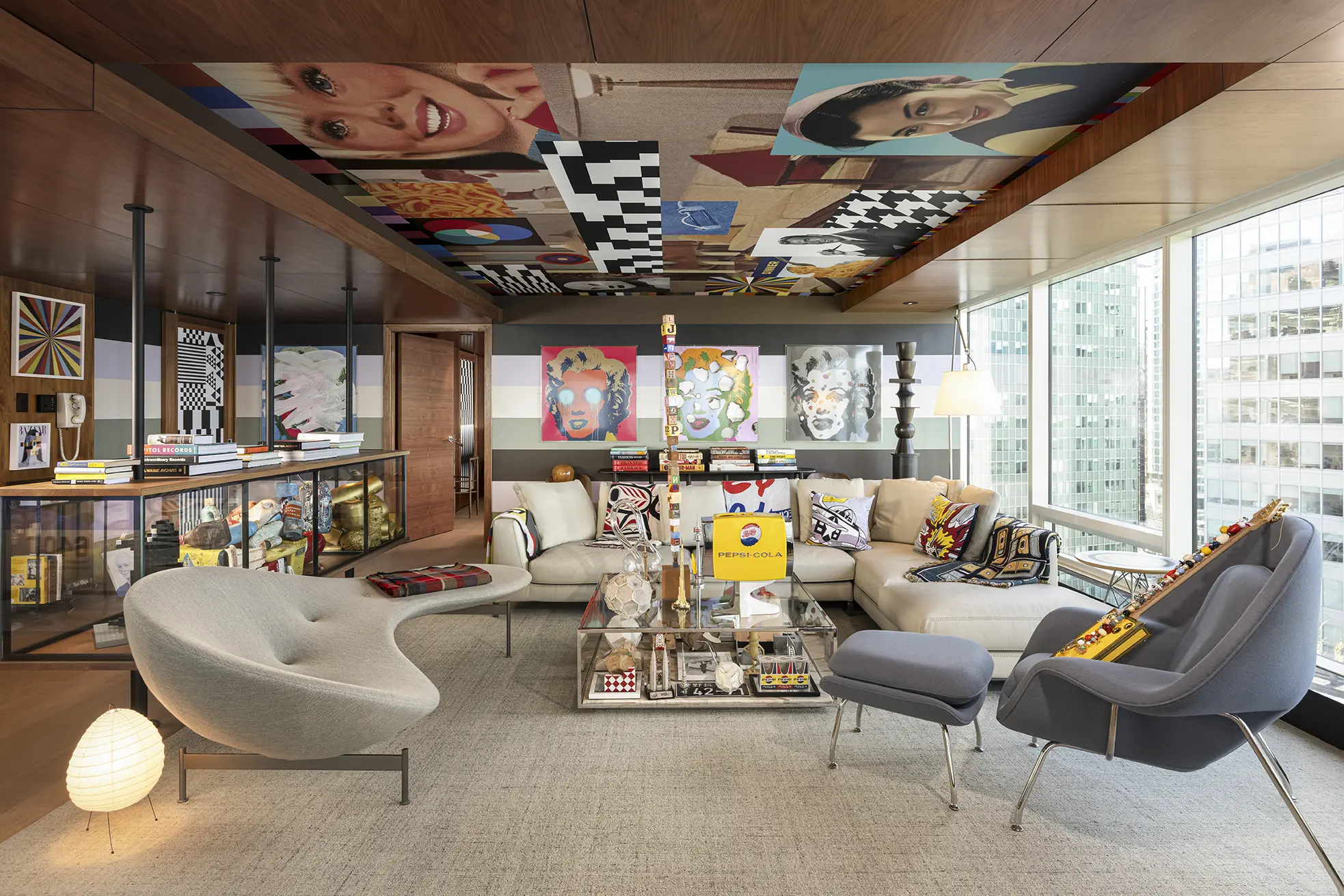
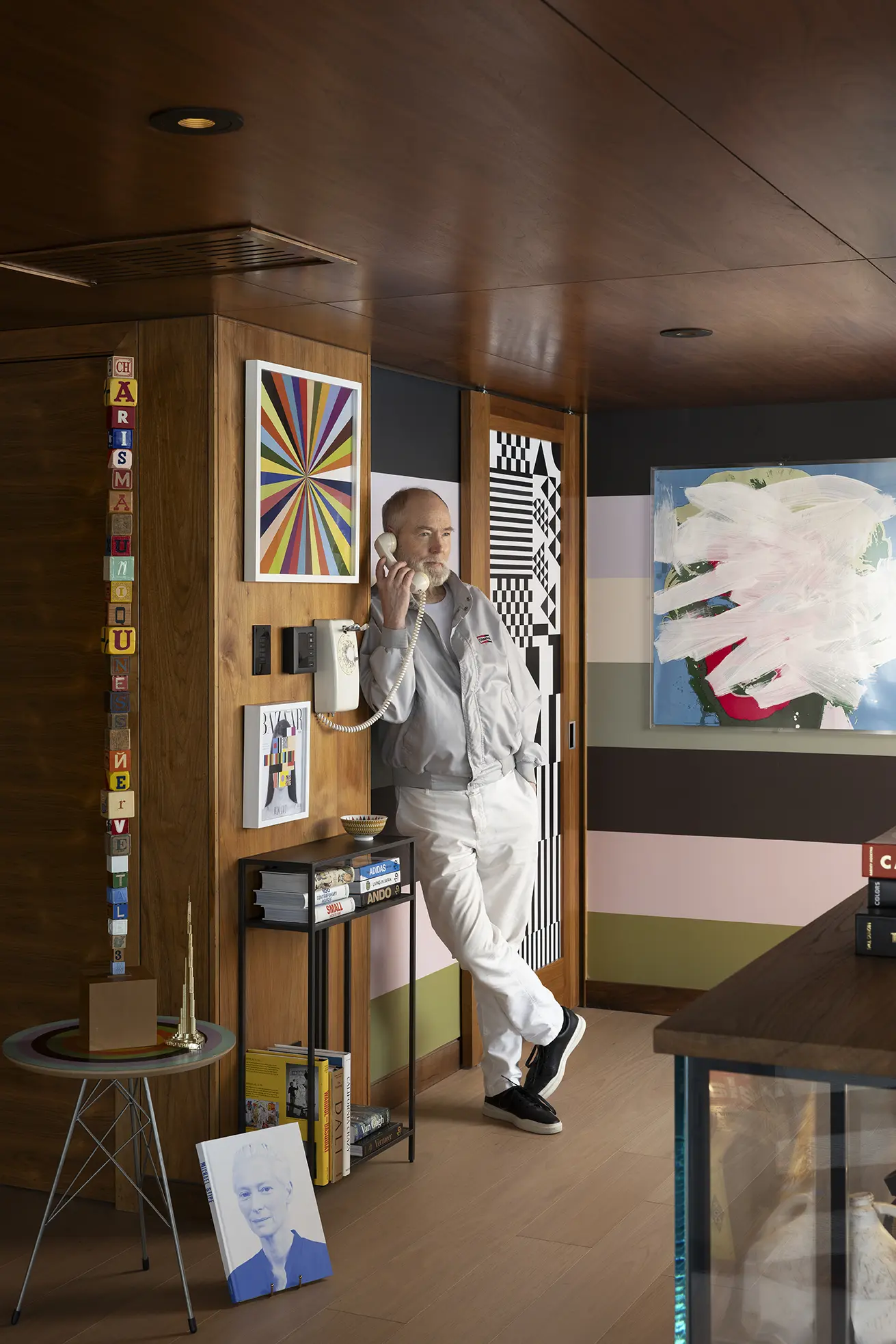
In the case of Suite X, the Fairmont Pacific Rim reveals its collaboration with renowned author and artist Douglas Coupland. The hotel suite is reimagined as a living gallery and retrospective of Coupland’s oeuvre. It’s a marriage of five-star comfort and the experience of entering the mind—if not the living room—of one of Canada’s most prolific and beloved creators.
As Coupland writes in an accompanying book given to guests who stay in Suite X, “This hotel suite is about my life and my city and my world, in ways I didn’t even realize until I was far into its growth. It’s the hotel room I wish I could have found during four decades of relentless travelling.”
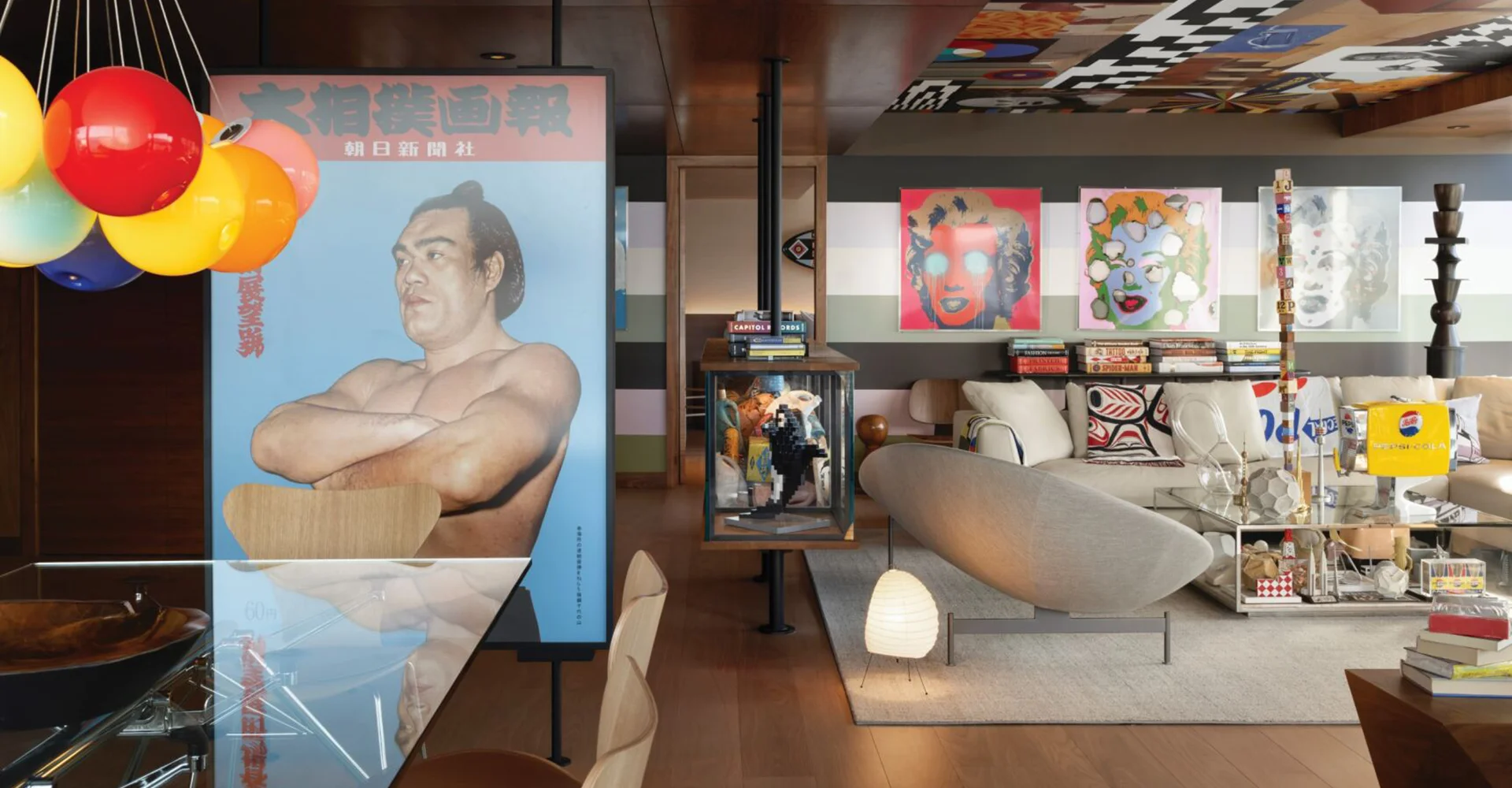
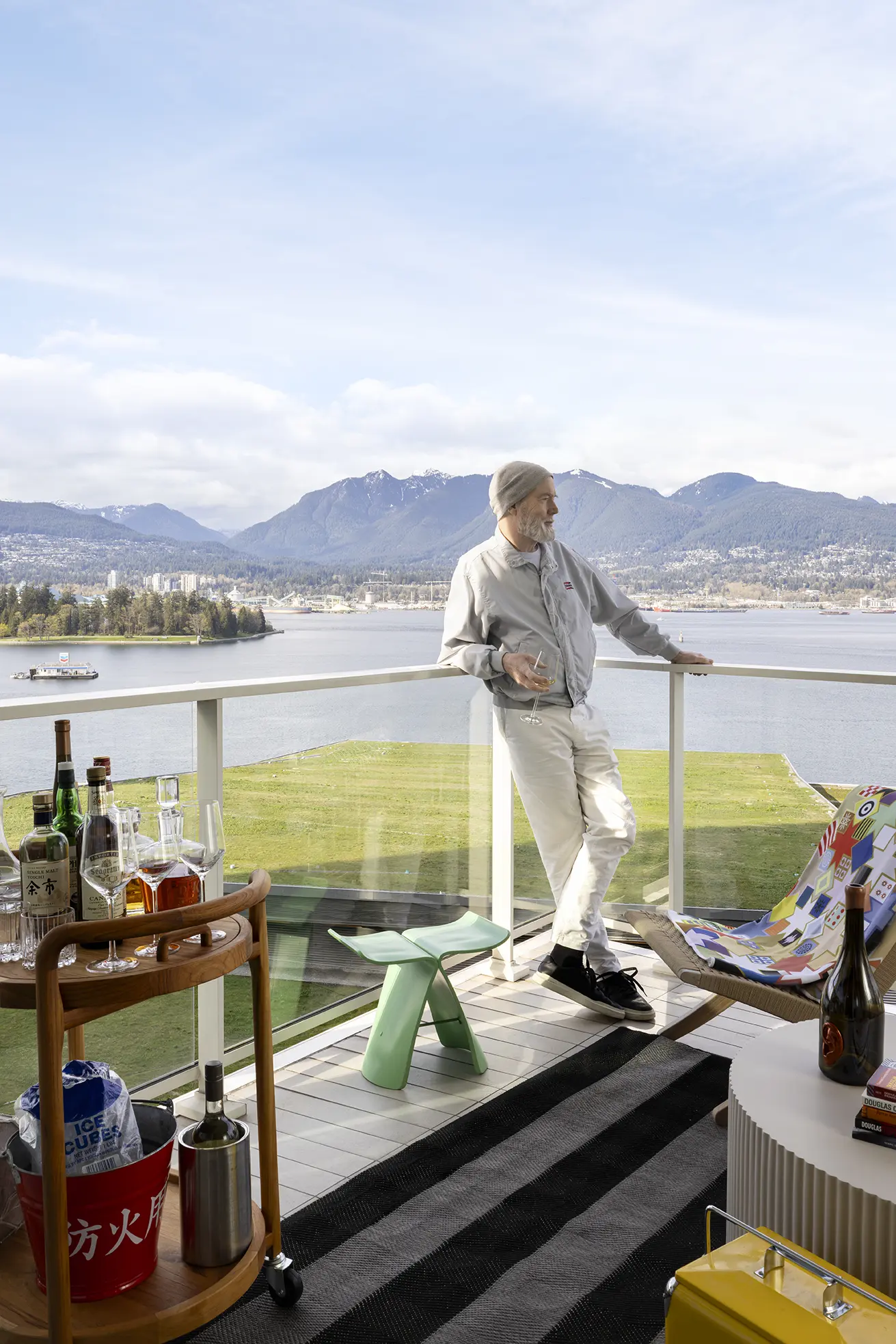
Accordingly, the suite is decorated with works that reference both Coupland’s career trajectory and his books, including Generation X and Girlfriend in a Coma, while gorgeous views of Coal Harbour, the North Shore Mountains, and the wilderness beyond situate each guest firmly in a West Coast sense of place. Suite X offers the ultimate fusion of the indoor-outdoor aesthetic and the inner workings of Coupland’s consciousness.
What are some of your favourite hotels?
Coupland: My favourite hotel is actually writer Susan Musgrave’s Copper Beech House in Masset, Haida Gwaii. I think the hotel is sort of an expression of Susan’s universe. The place has never had a boom; it’s never had a bust; it’s just always been there. It’s at the end of the line and there’s nowhere else to go. There are hundreds of different ecosystems within a stone’s throw of the place, and the island itself is magic. It’s the most intimate hotel experience I’ve ever had.
I’m also a fan of the Park Hyatt in Tokyo, where I went to art school. There are panoramic views of the city, but instead of being compact, the rooms are, like, 20 feet wide. It’s the best of the last of pre-over-tourism Japanese hotels. It’s an exceptionally quiet hotel with plush wool carpets everywhere. No echo—only a beautiful kind of muffled sound.
The Ace Hotel in Shoreditch, London, is also an inspiration. It was one of the first hipster hotels, and when I stayed there in 2005, the rooms were really nice cubes, with good Wi-Fi and a mishmash design approach. I remember going downstairs to the lobby, where there were maybe 60 millennial hipsters working in total silence on their computers. No one uttered a word, and I thought, “This is the future of travel.”
What was your vision for Suite X?
My number-one concern was the big competition with everything out the window. As I write in the book, my father leased floatplanes down in Coal Harbour, so I have a personal connection to the site and to the wilderness beyond. There’s a killer view of Coal Harbour and the mountains outside and, basically, there’s my brain on the inside.
This hotel suite is about my life and my city and my world, in ways I didn’t even realize until I was far into its growth.
Then there’s a weaving, back and forth, between the two. There are works in the suite that fuse them, like the marine drift plastics (inspired by the 2011 Tōhoku earthquake and tsunami, which deposited “insane amounts of drift crap up BC’s northmost coast”) and the LEGO scale model (by LEGO-building champion Paul Hetherington) of my nearby 2010 Olympics-inspired steel sculpture of an orca. I wanted guests to feel they are in a unique space; a place where they say, “Oh, I’m in a cool hotel room, but that cool hotel room is in Vancouver and only Vancouver.”
What are some of your favourite pieces in the suite?
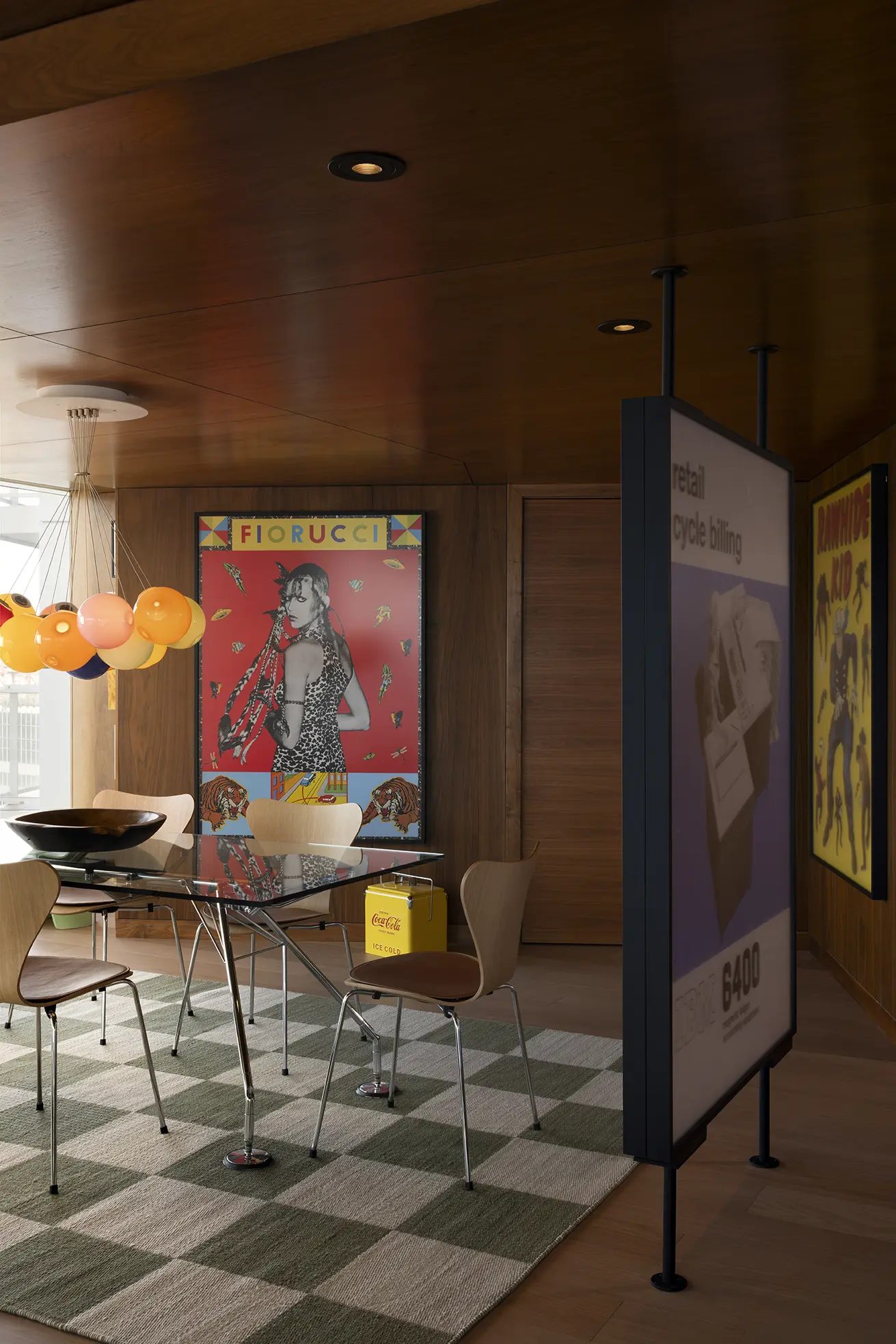
The Fiorucci Italian fashion piece is one. I remember, in 1979, it was Columbus Day, and I took the bus down from Montreal to New York City and went to their showroom. It was just, like, “Wow, the inside of my brain just turned into a retail space!” I looked around and I found this small poster, and I scanned it and rebuilt it from scratch. It’s got this great energy. It’s got colour, it’s sexy, it’s got cars—it’s got everything. That’s probably what my brain looks like. That poster is probably the clearest expression of that.
I also like the sumo wrestler and the IBM x3400 posters. For me, they’re like 20th-century portraiture. I make them and collect them, and my house is kind of stuffed with them. I think it was important to create that sort of “pop” energy.
The distressed Warholian Marilyns I made during the second COVID summer… I did this series of photos that were re-staging moments in my 1996 novel, Girlfriend in a Coma. The Marilyns were from a shoot we did on Taylor Way in West Vancouver. We did other photos there, like the one with the model in a room full of baked beans that spelled out the word “Doom.” The houses that are in the sequence are pretty much the houses I grew up in and around. They evoke another Vancouver that once existed that is very deep in my memory. They make the suite feel a bit more personal to me.
Do you prefer being on the road or being at home?
These days, at home. I burned out after 30-plus years of hotels. I’ve spent the equivalent of six years in hotels and have collected hundreds of boarding passes. If I go somewhere now, it has to be great, not good.
Do you prefer writing in hotel rooms or at home?
All writers I’ve ever met love writing in a hotel room, where there are absolutely no demands on your attention and you can really just think.
What was the process of designing Suite X like for you personally?
Oddly, it made me reassess three decades of visual work. I’d never connected all of the dots on how so much of it is about ecology. Without the inclusion of the marine pieces, and engagement of the city itself as a central feature in my life, then it would be just another cool hotel room with a nice view.
This interview has been edited for clarity and brevity.